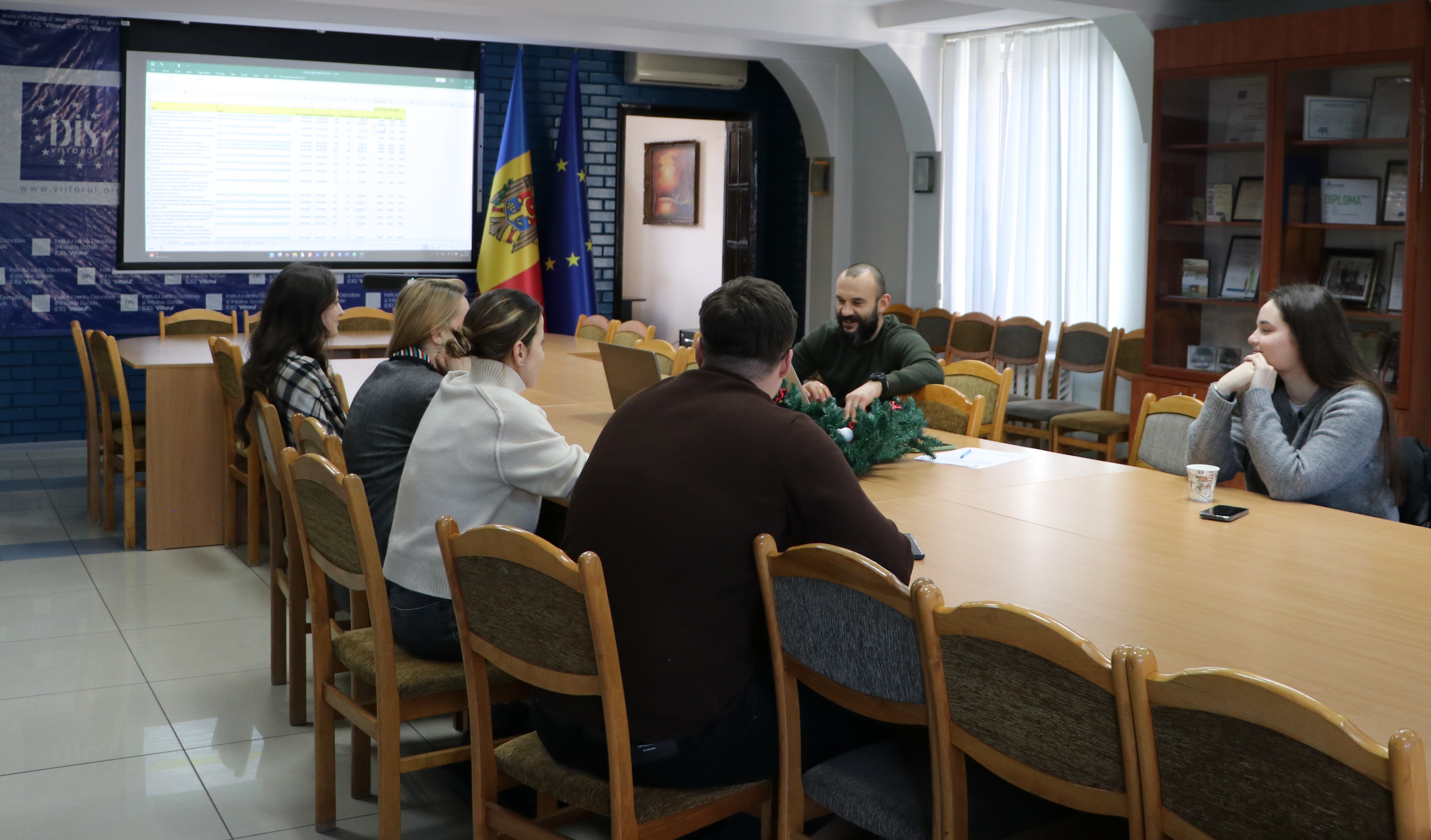
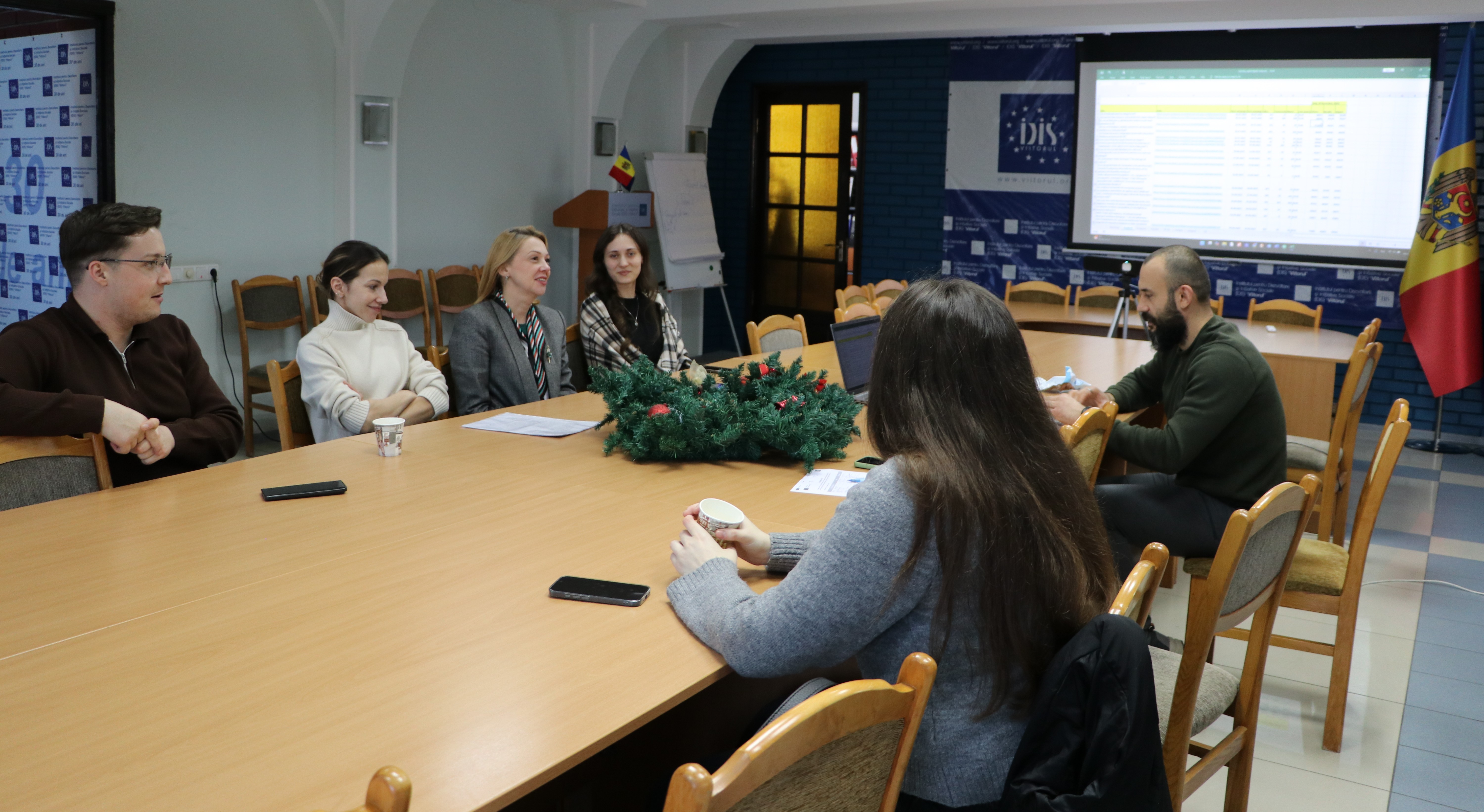
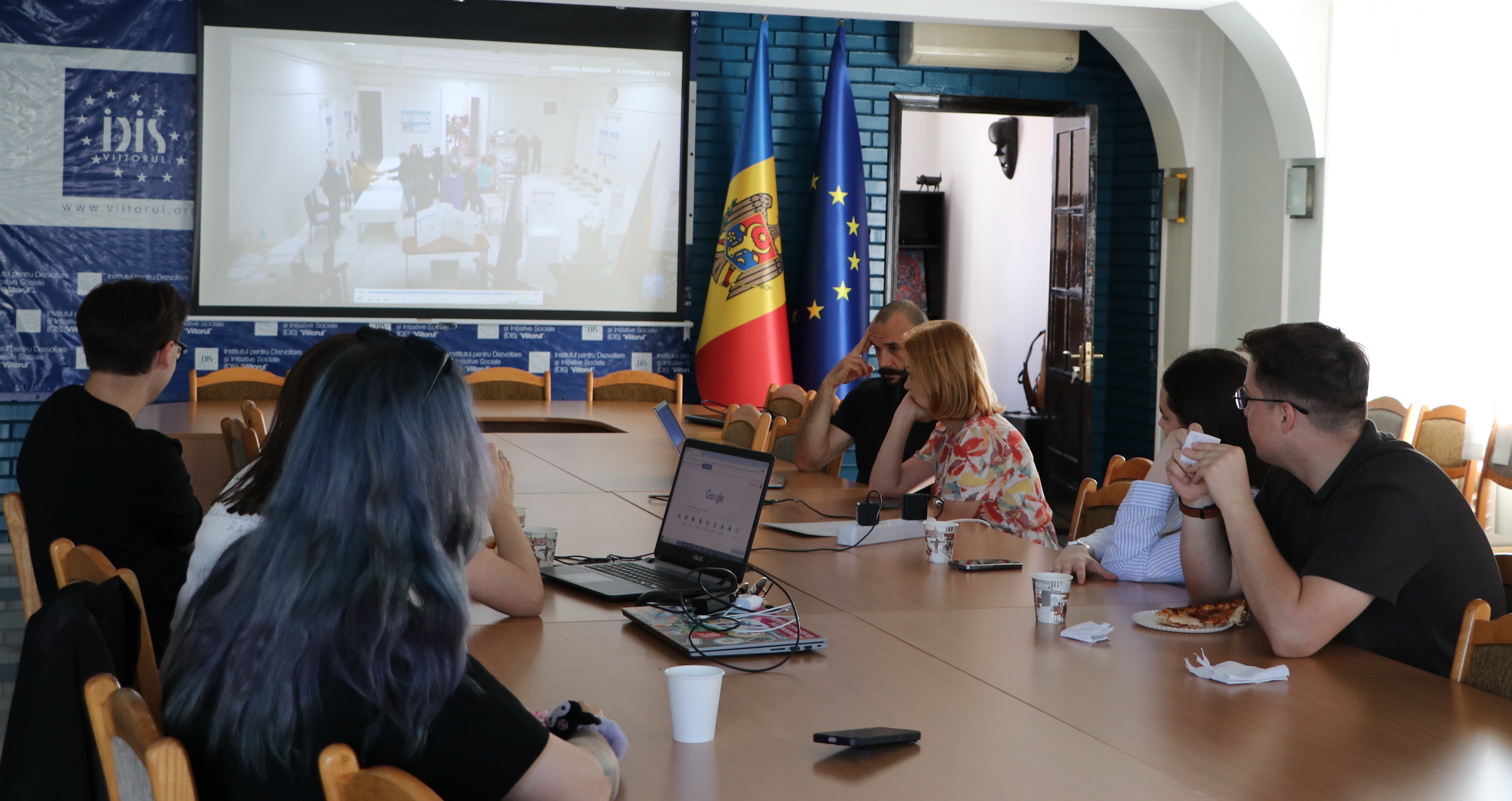
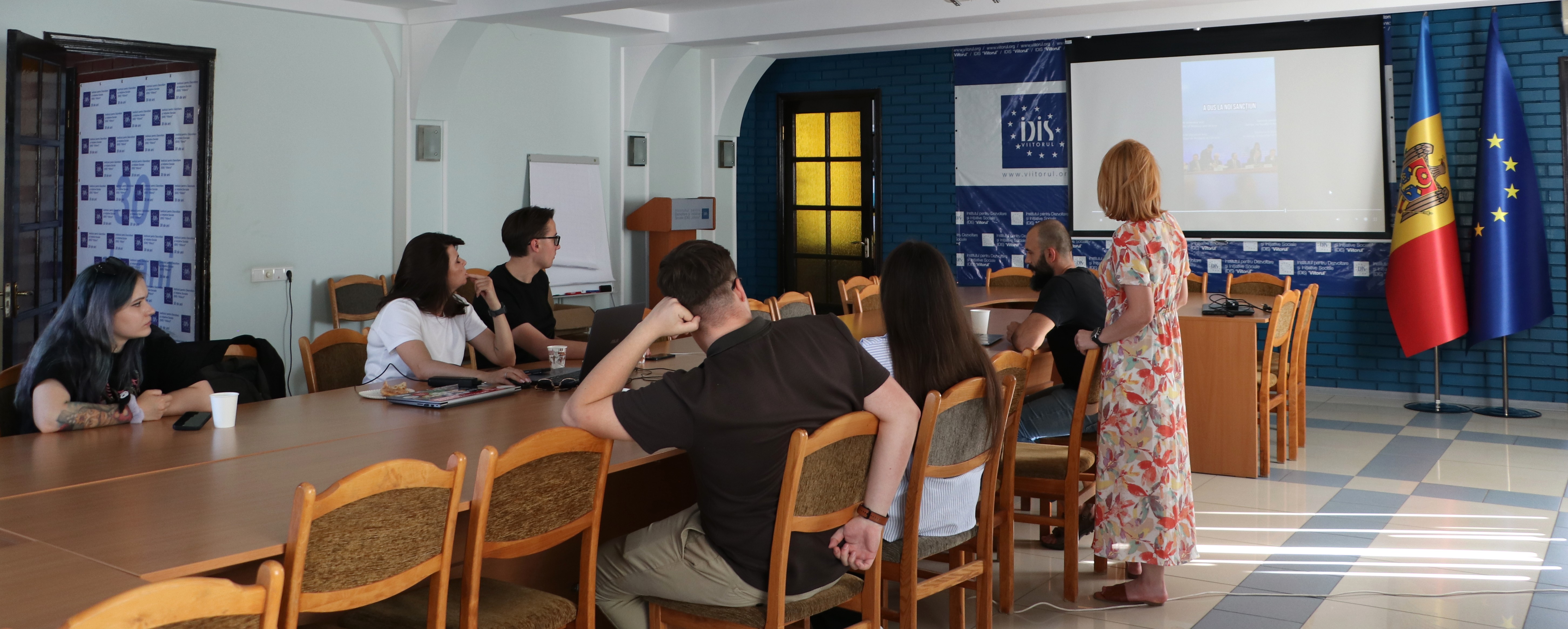
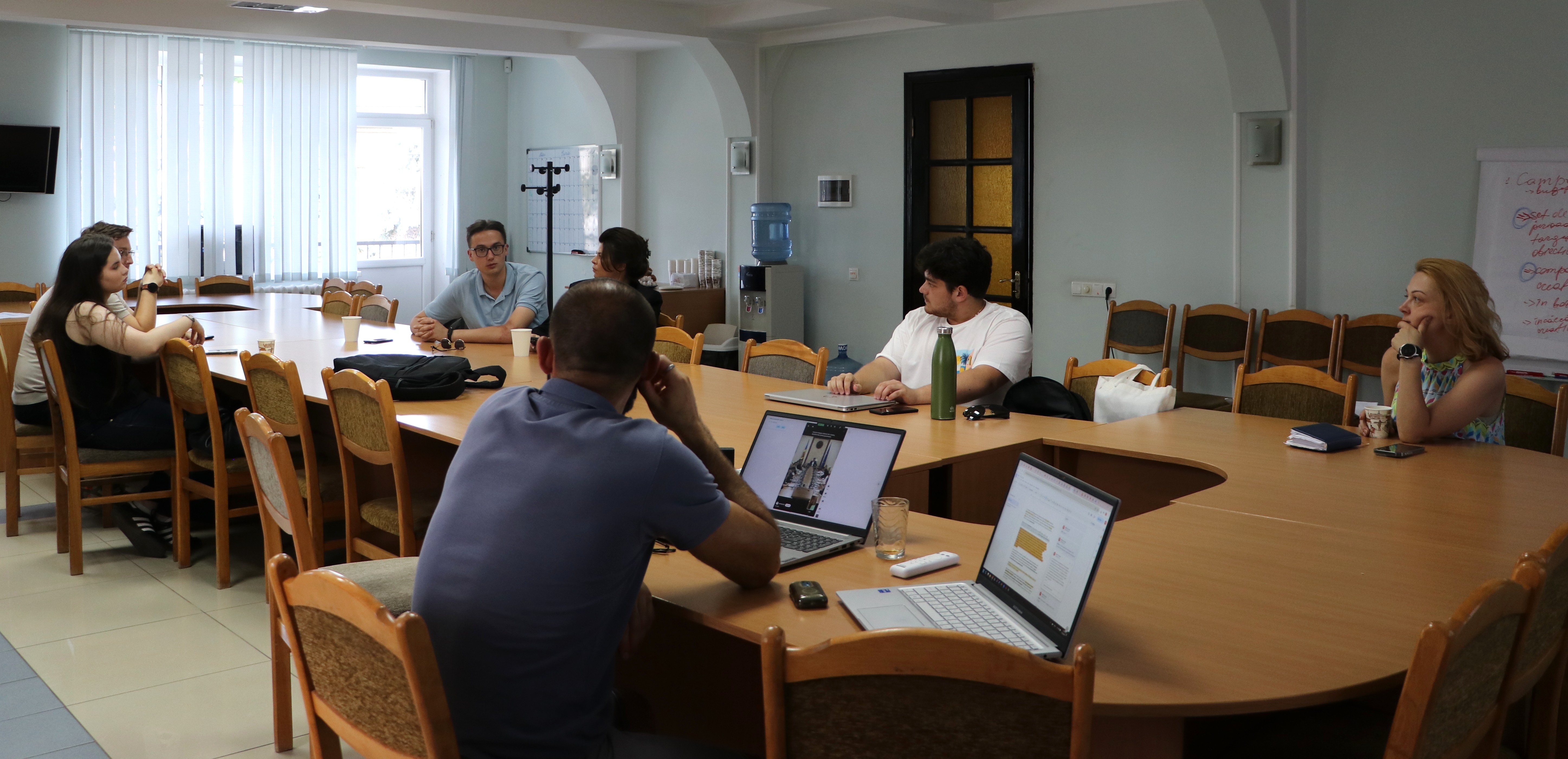
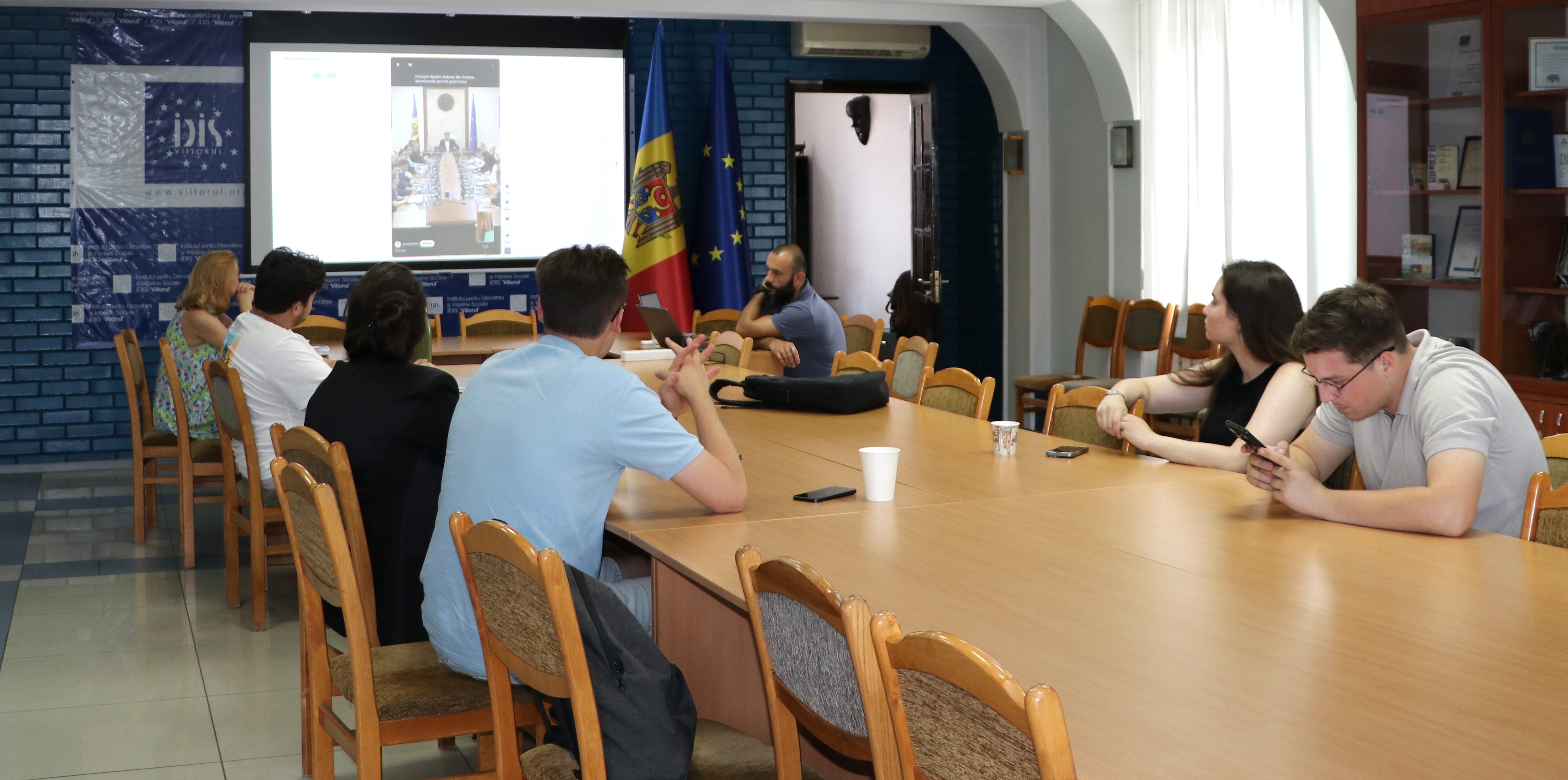
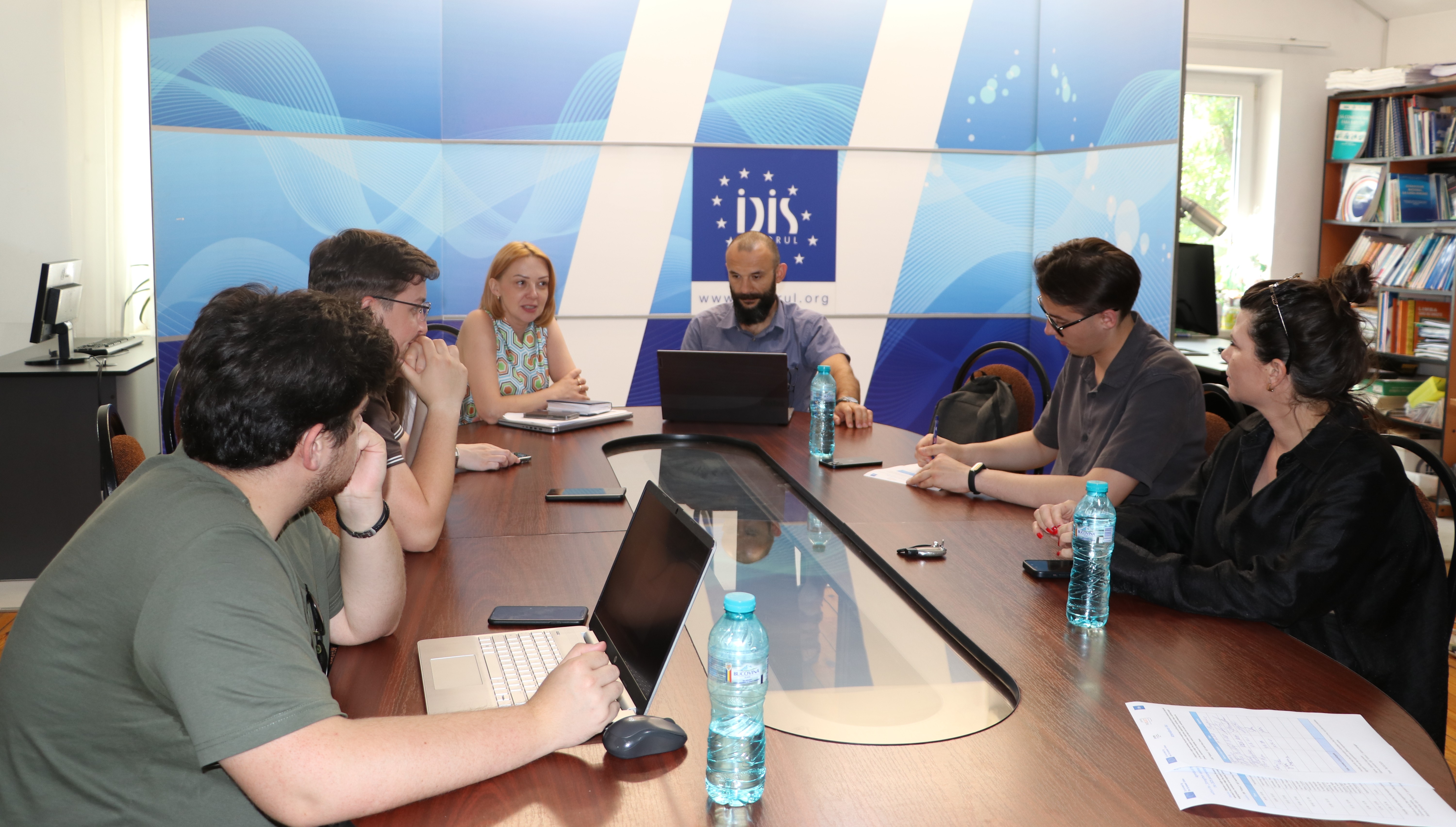
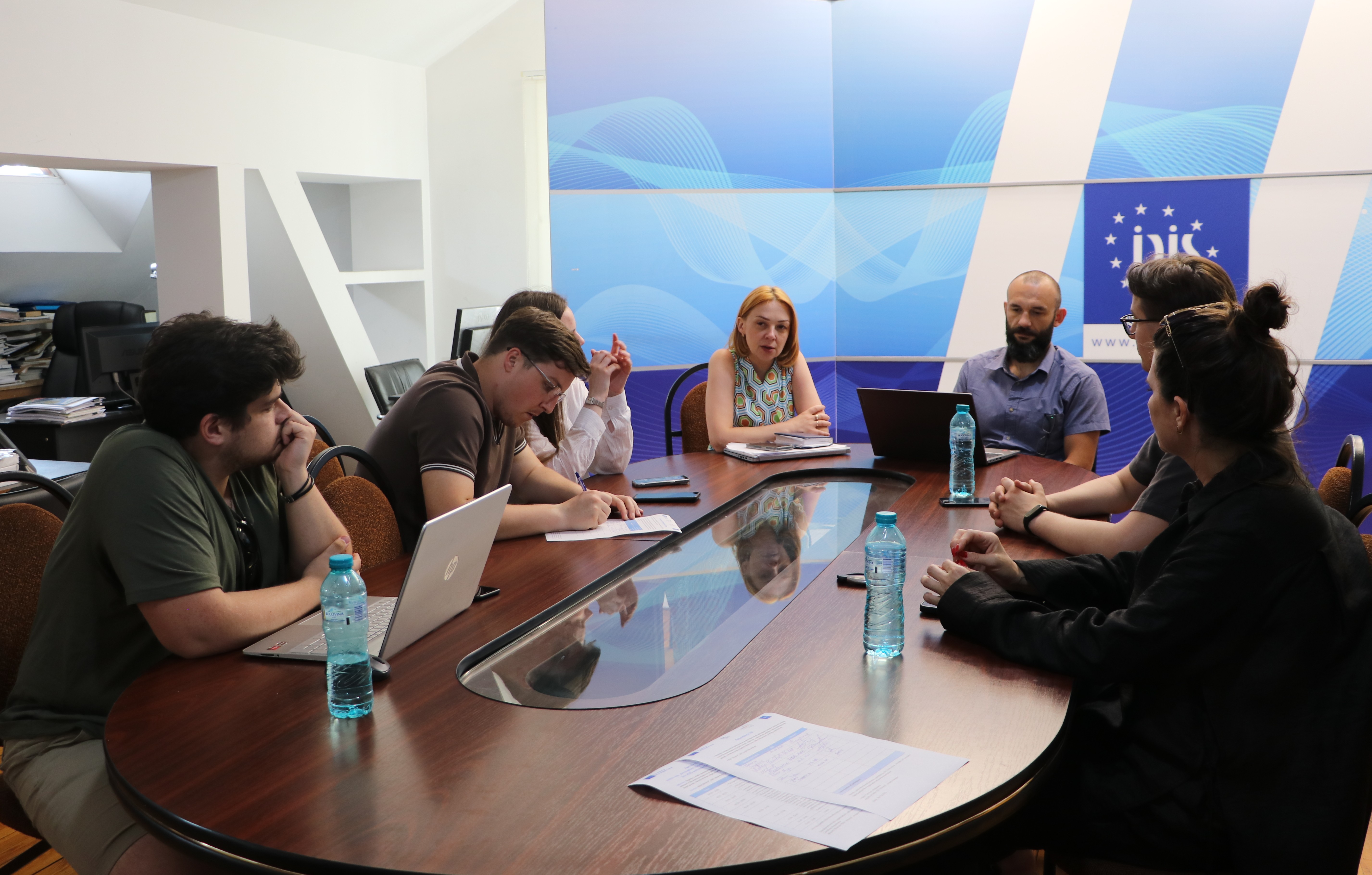
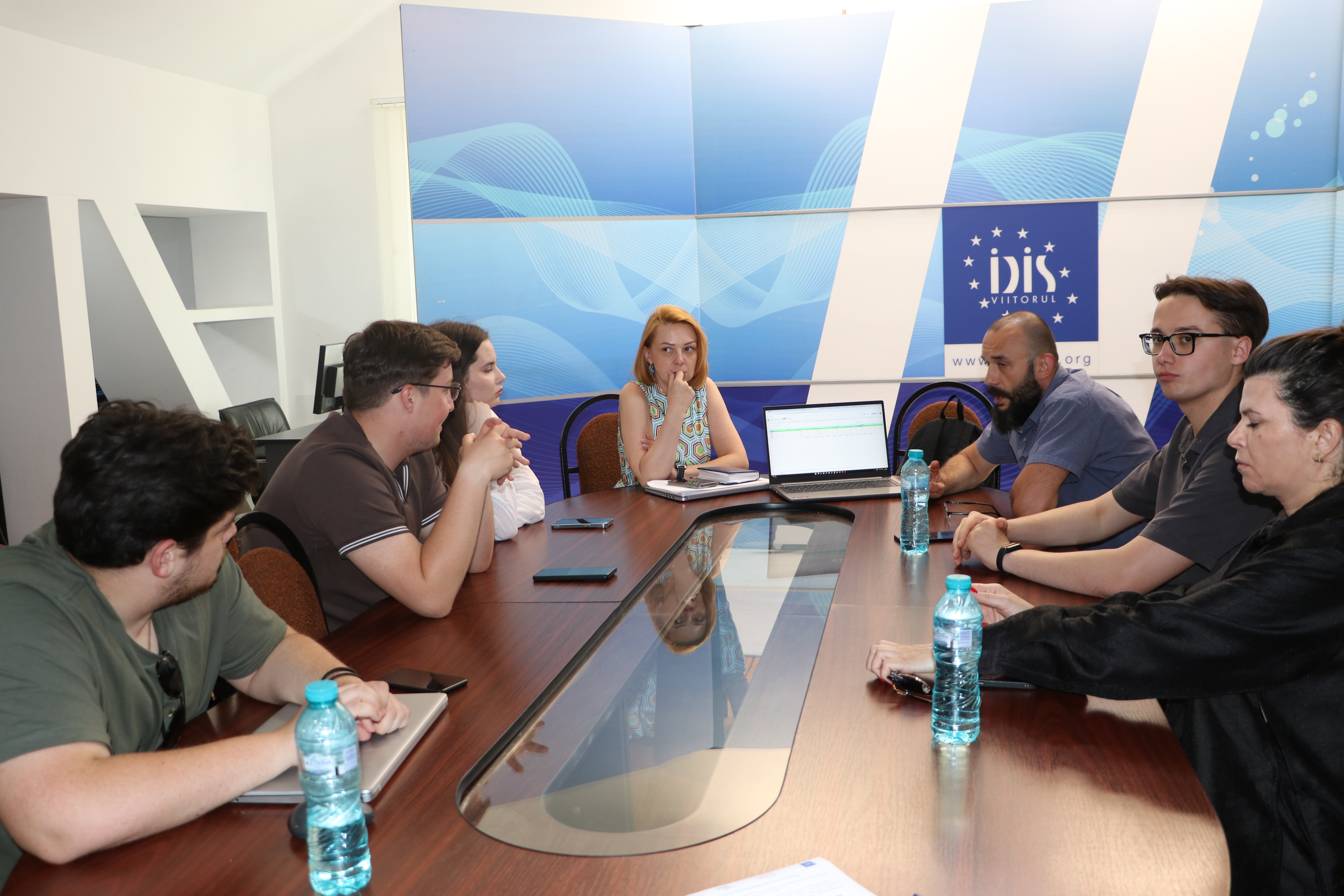
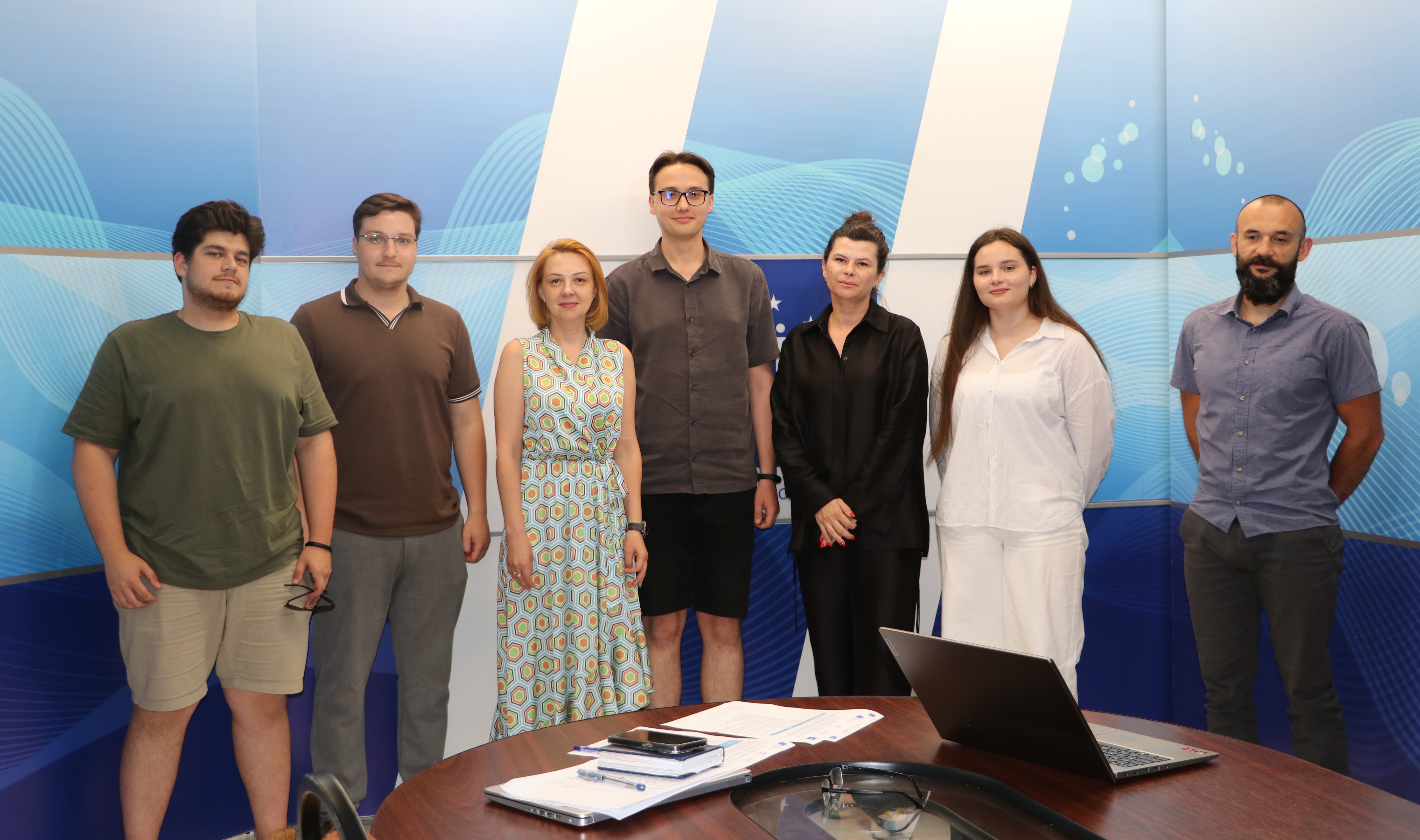
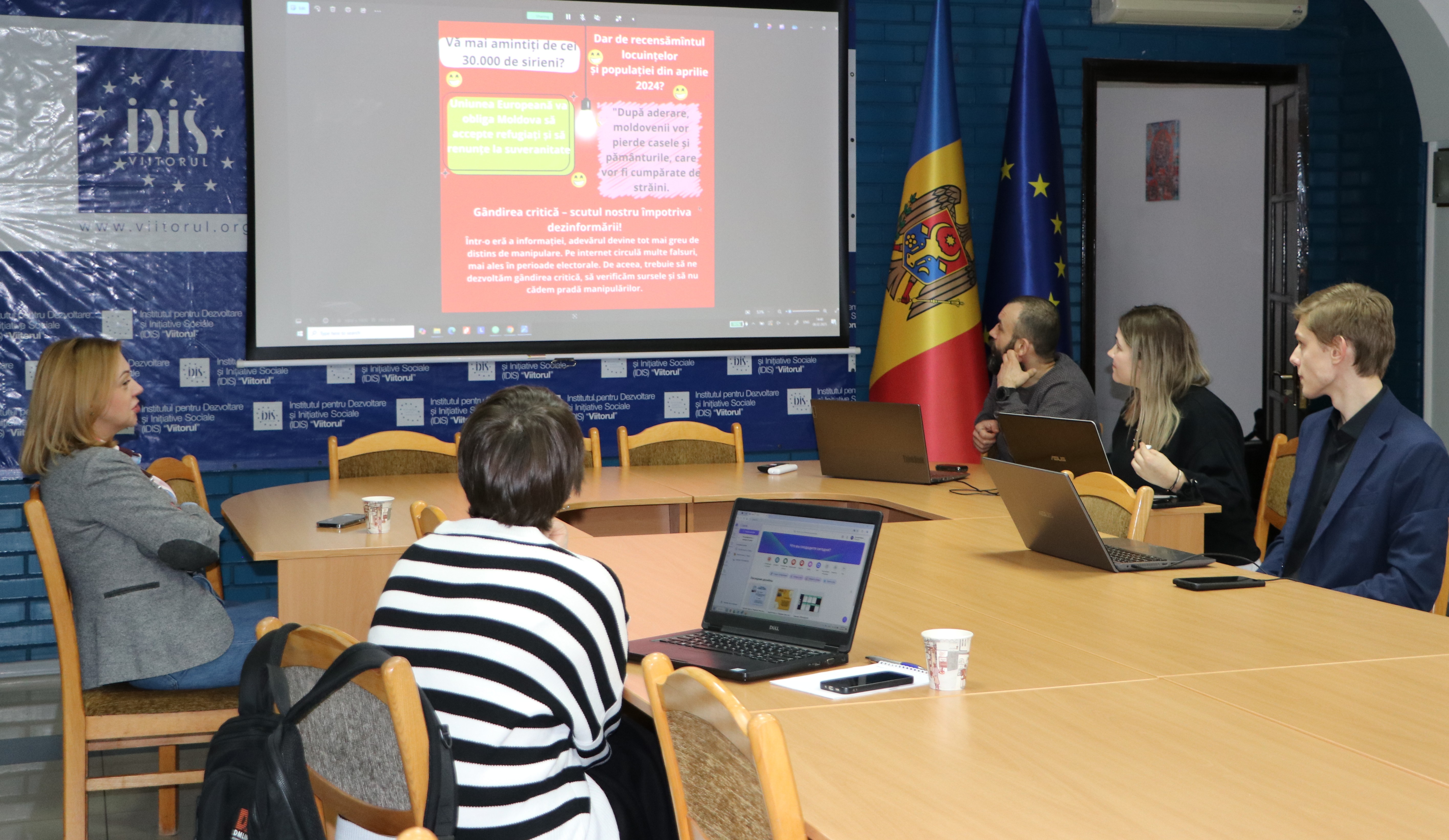
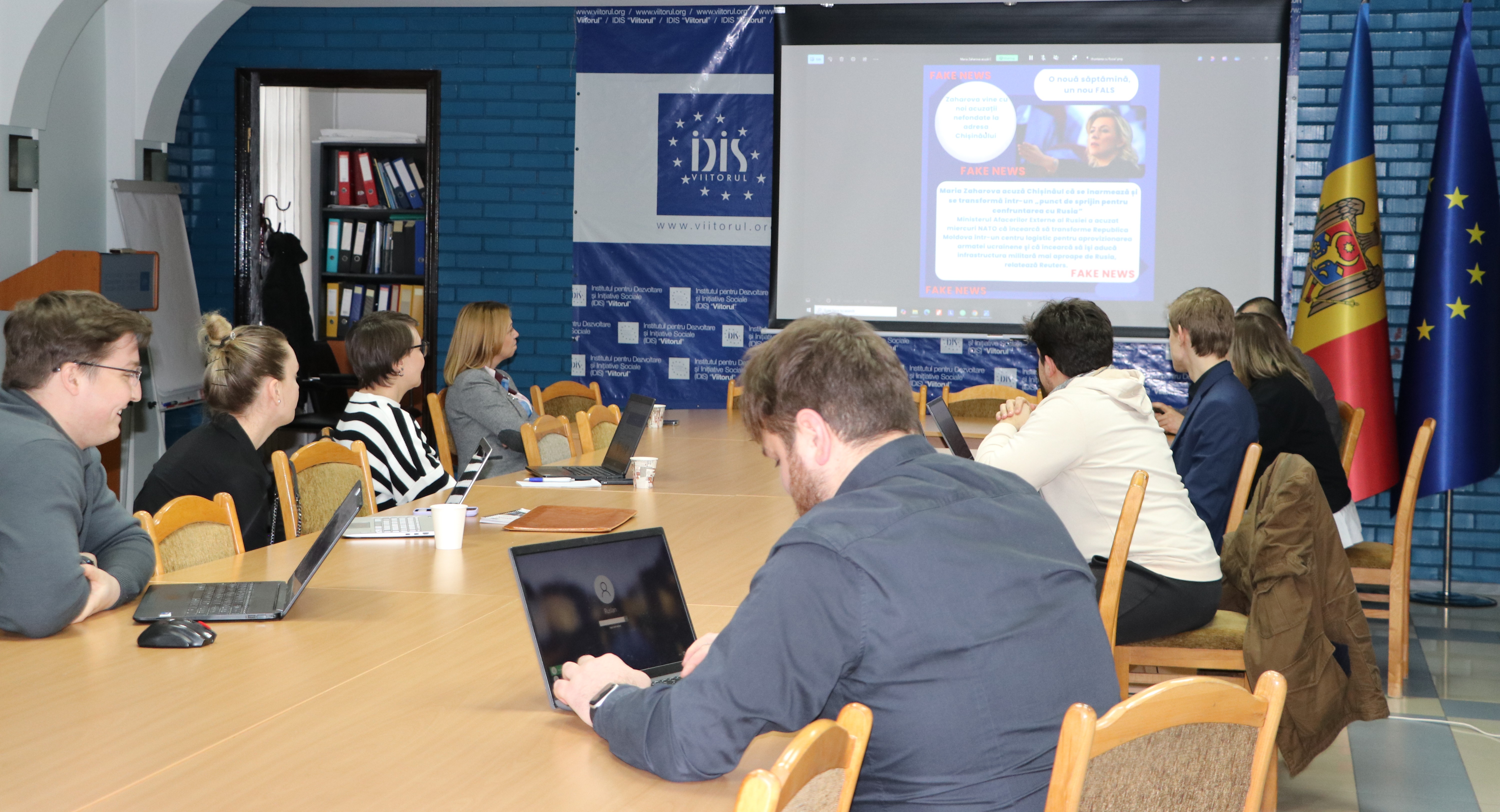
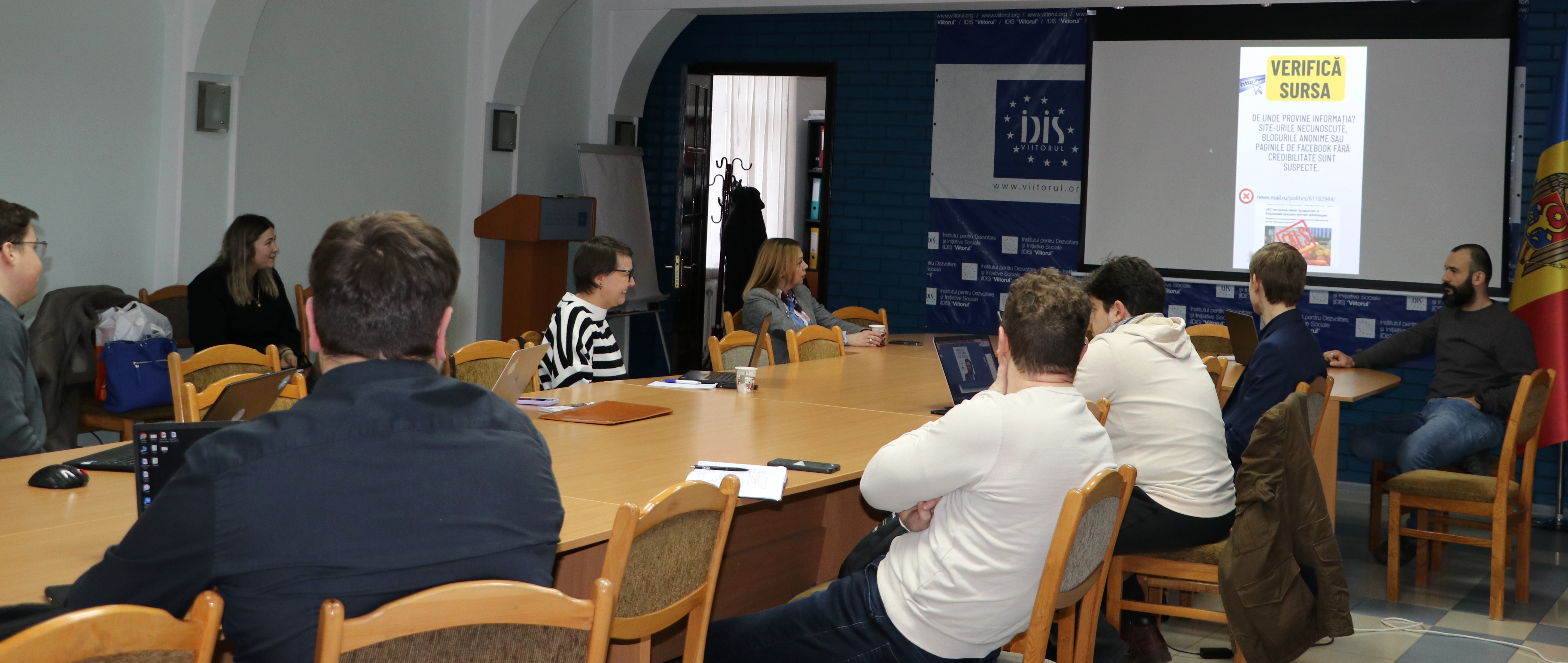
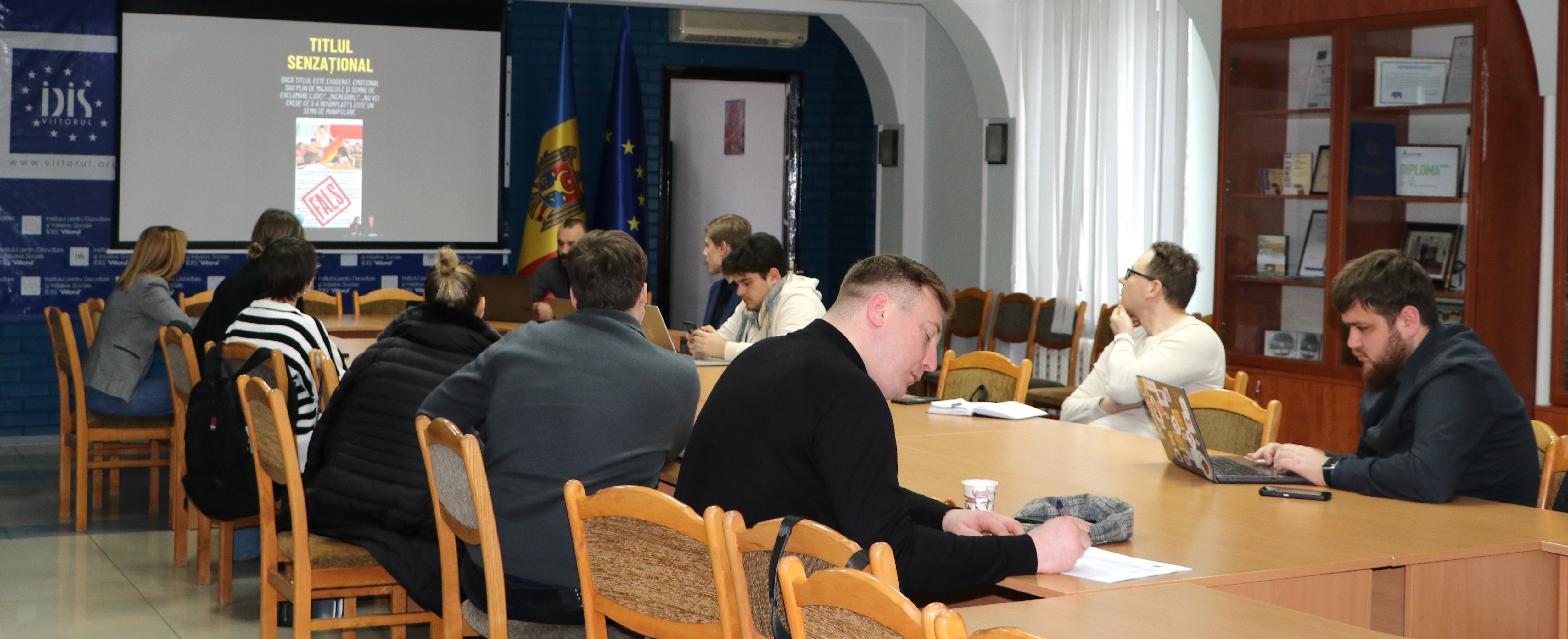
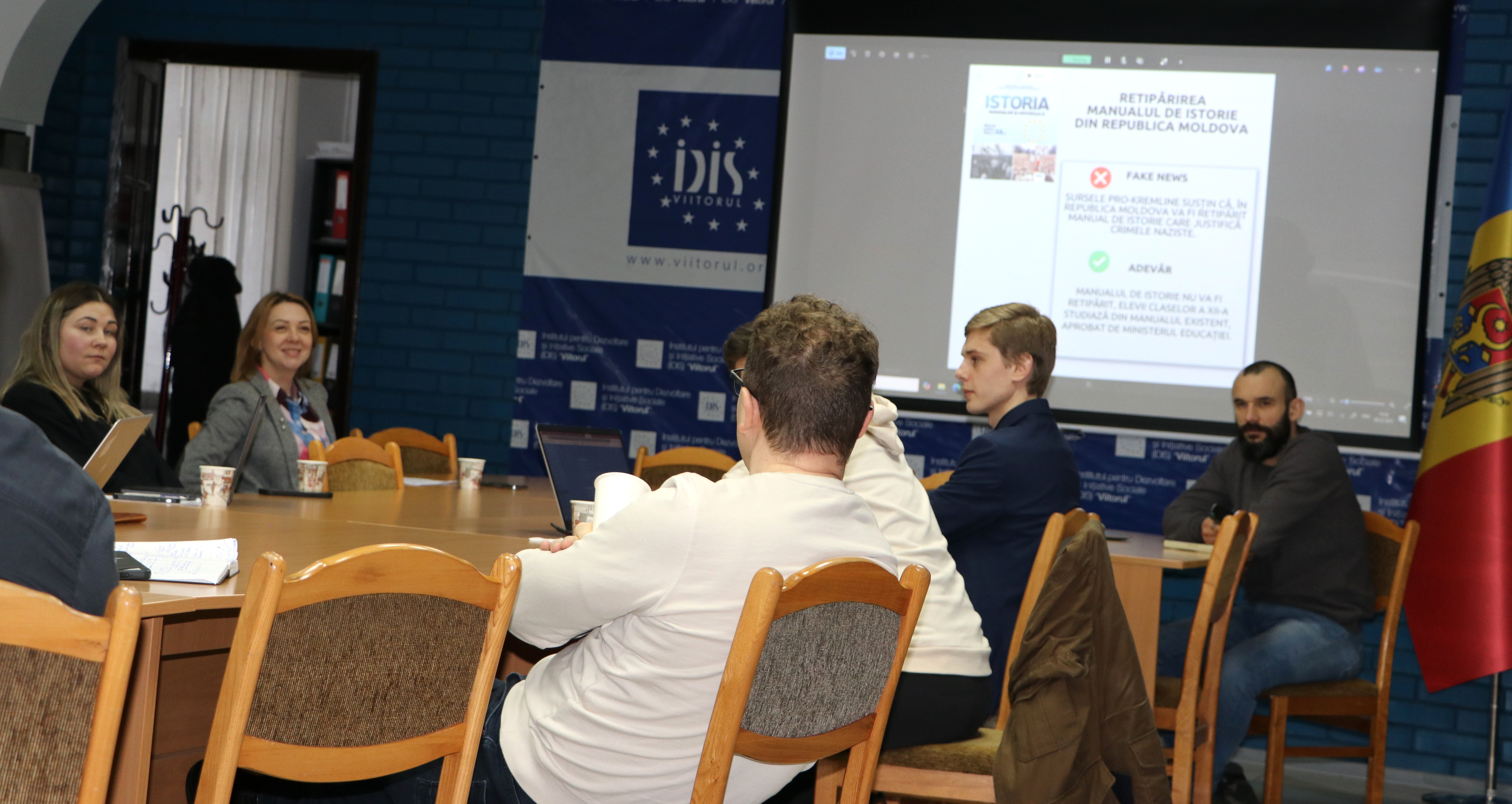
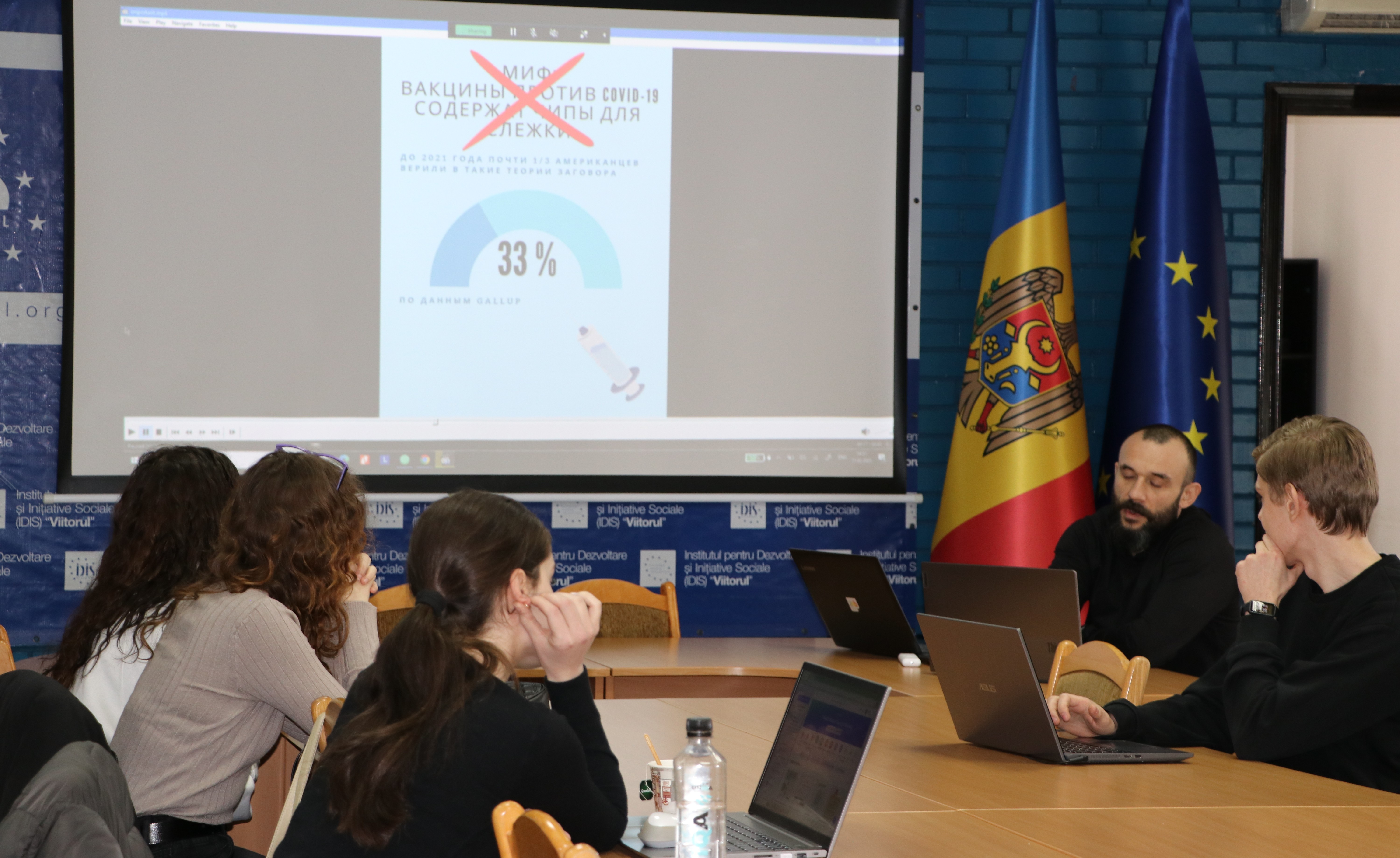
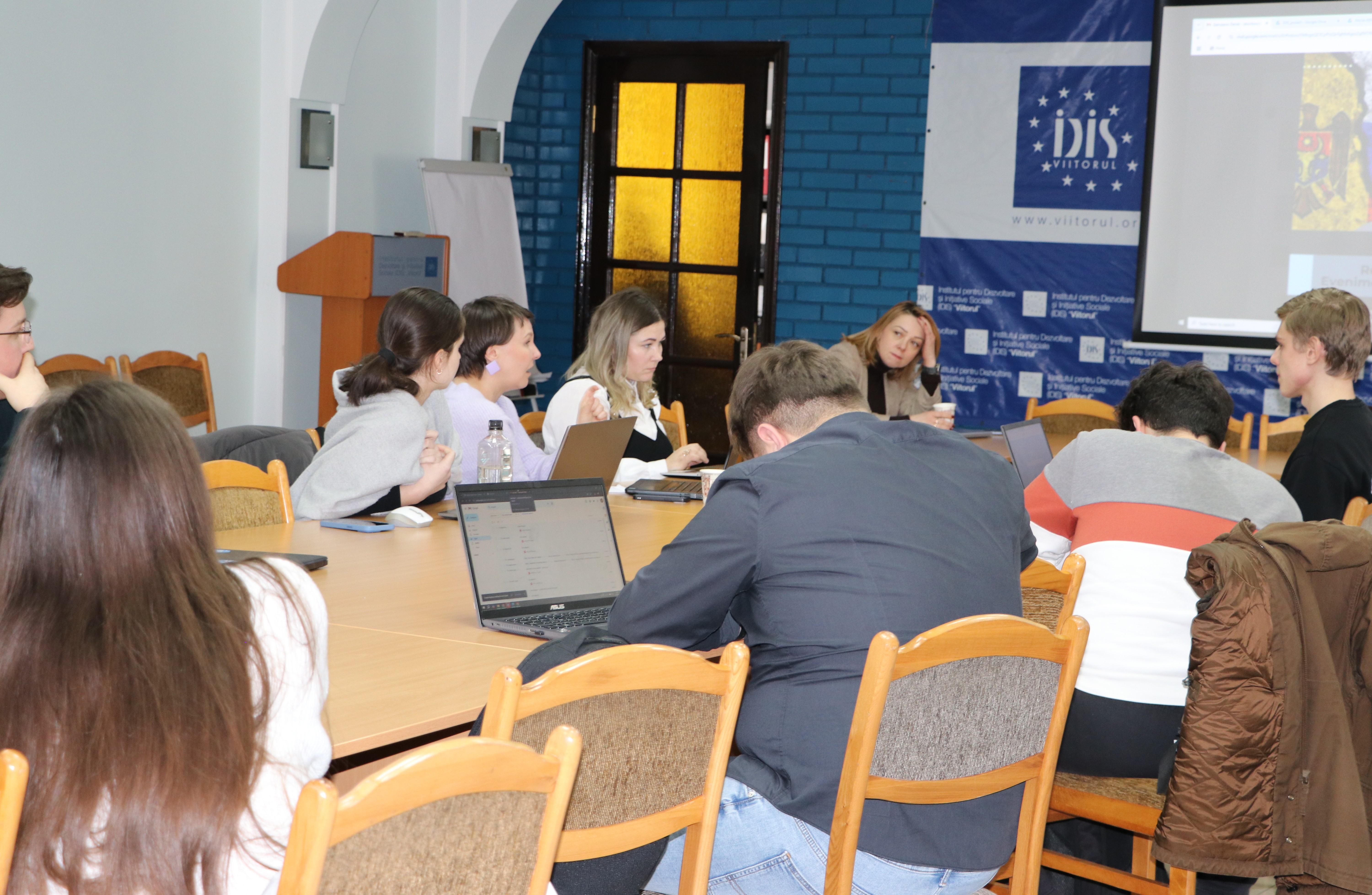
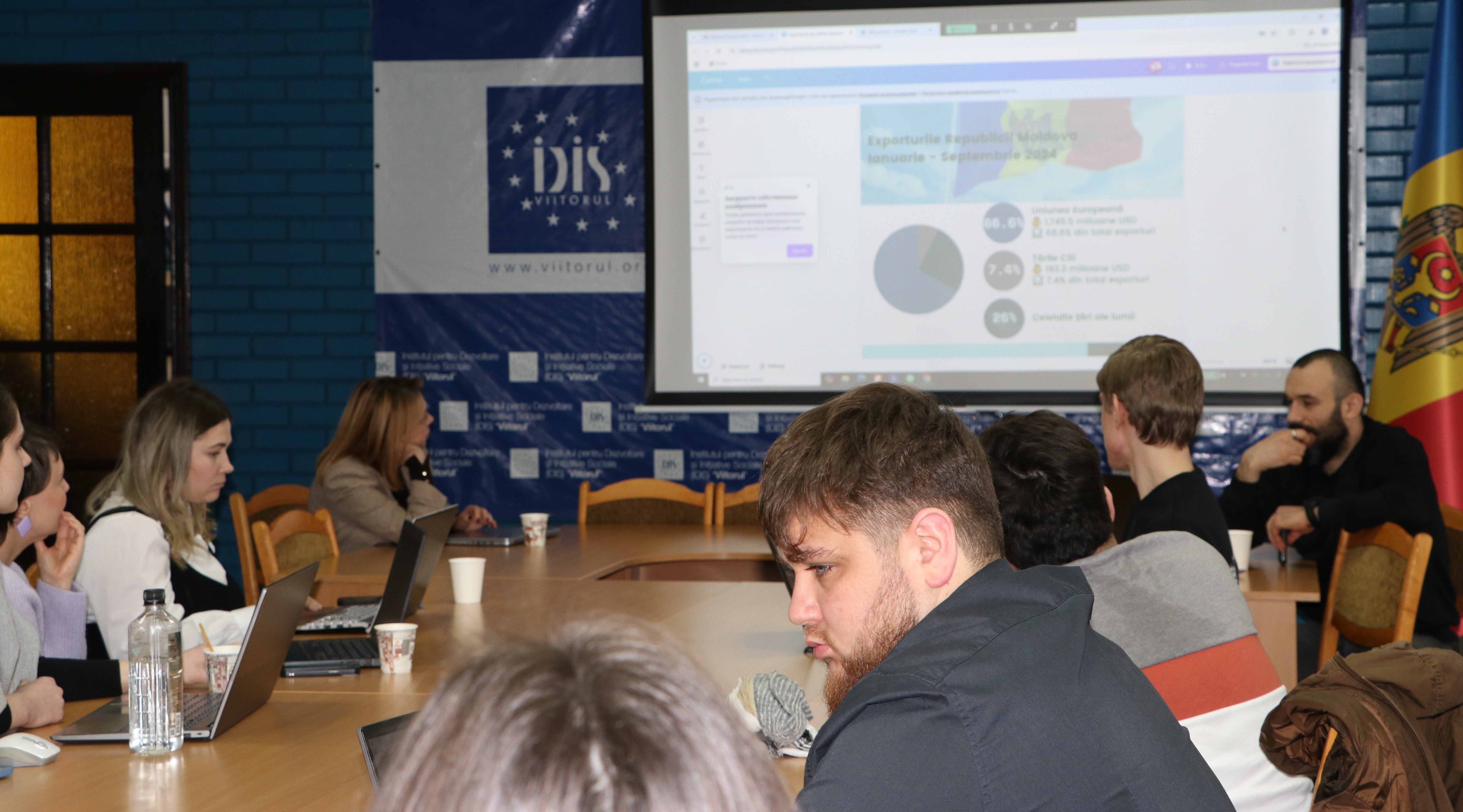
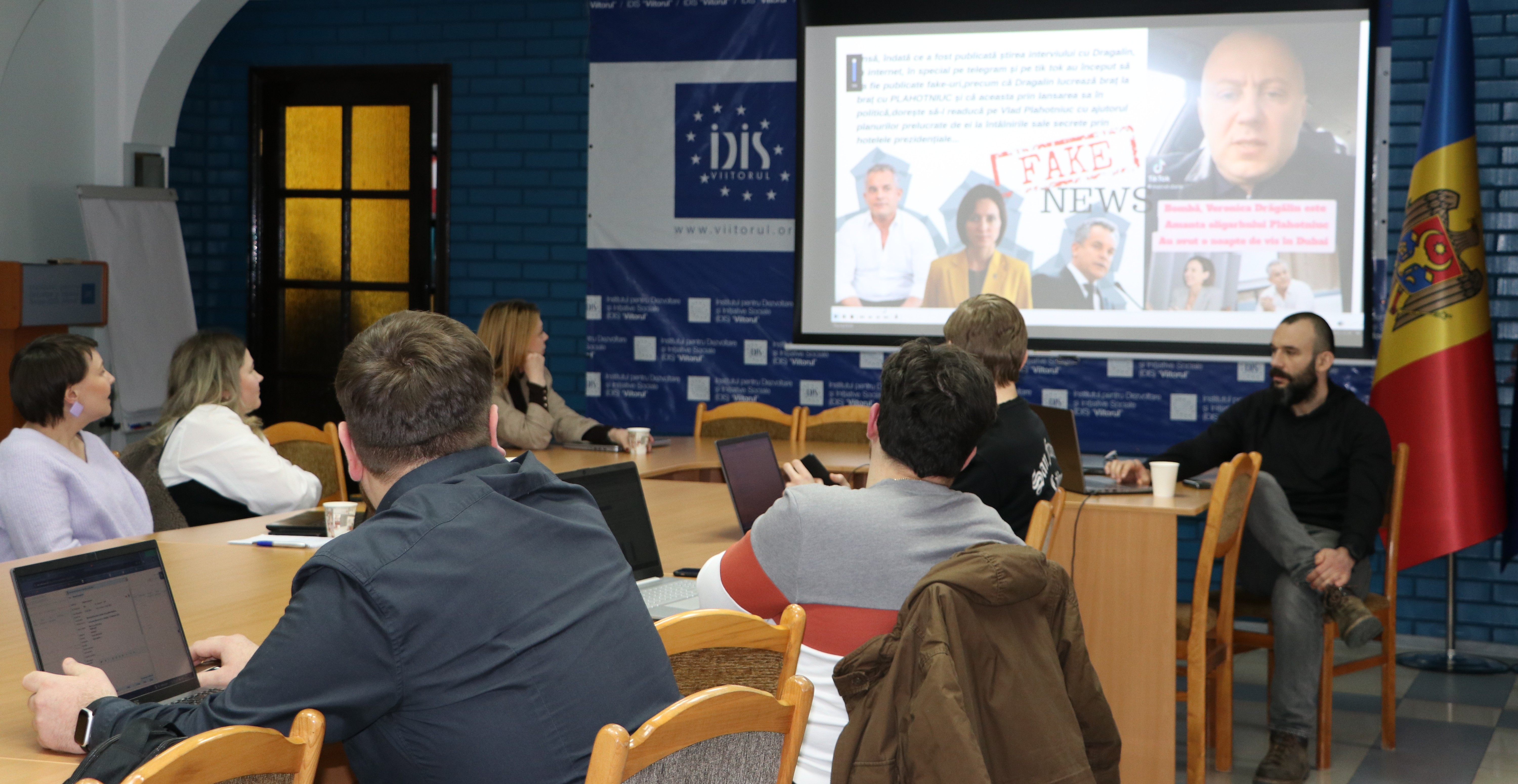
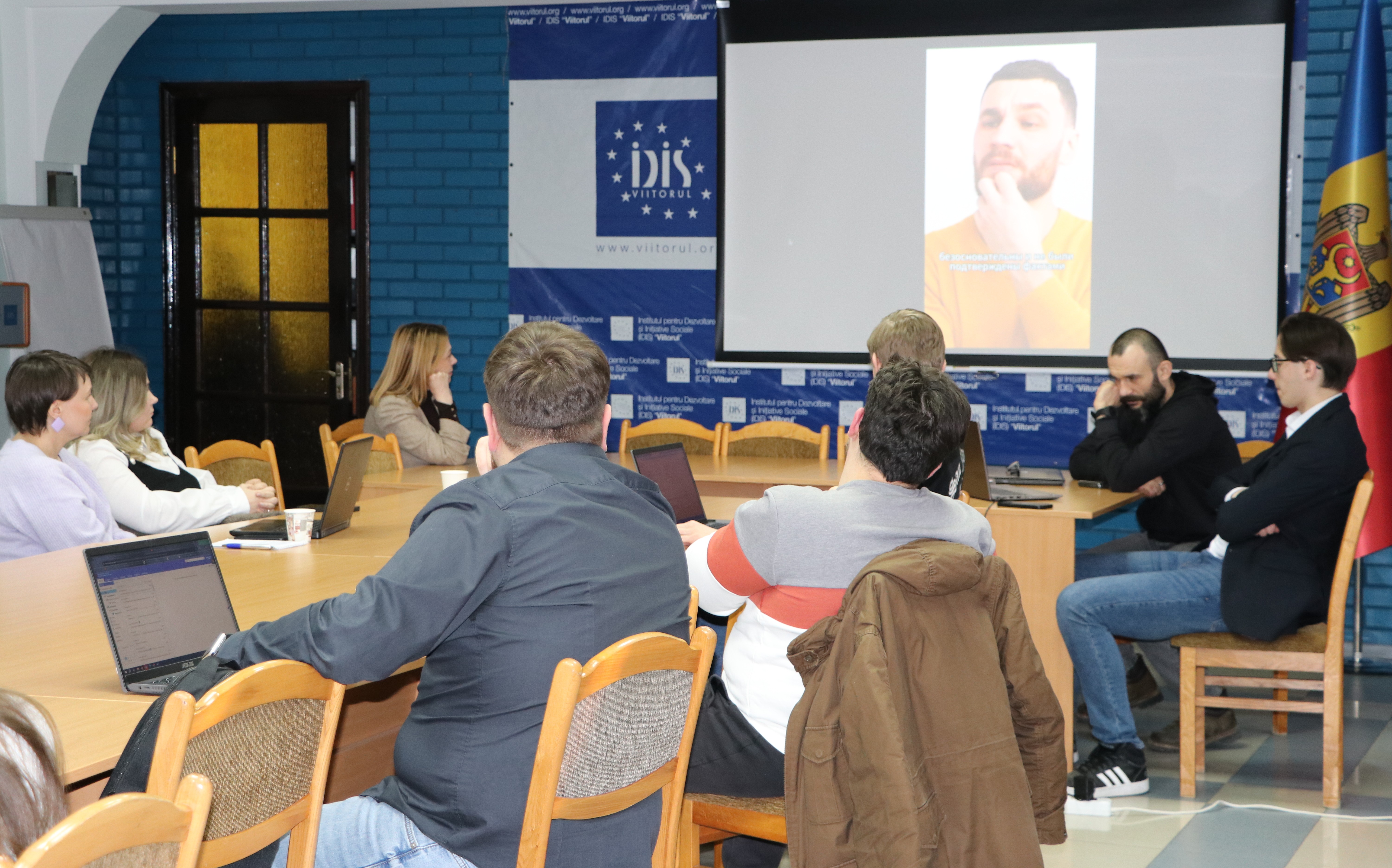
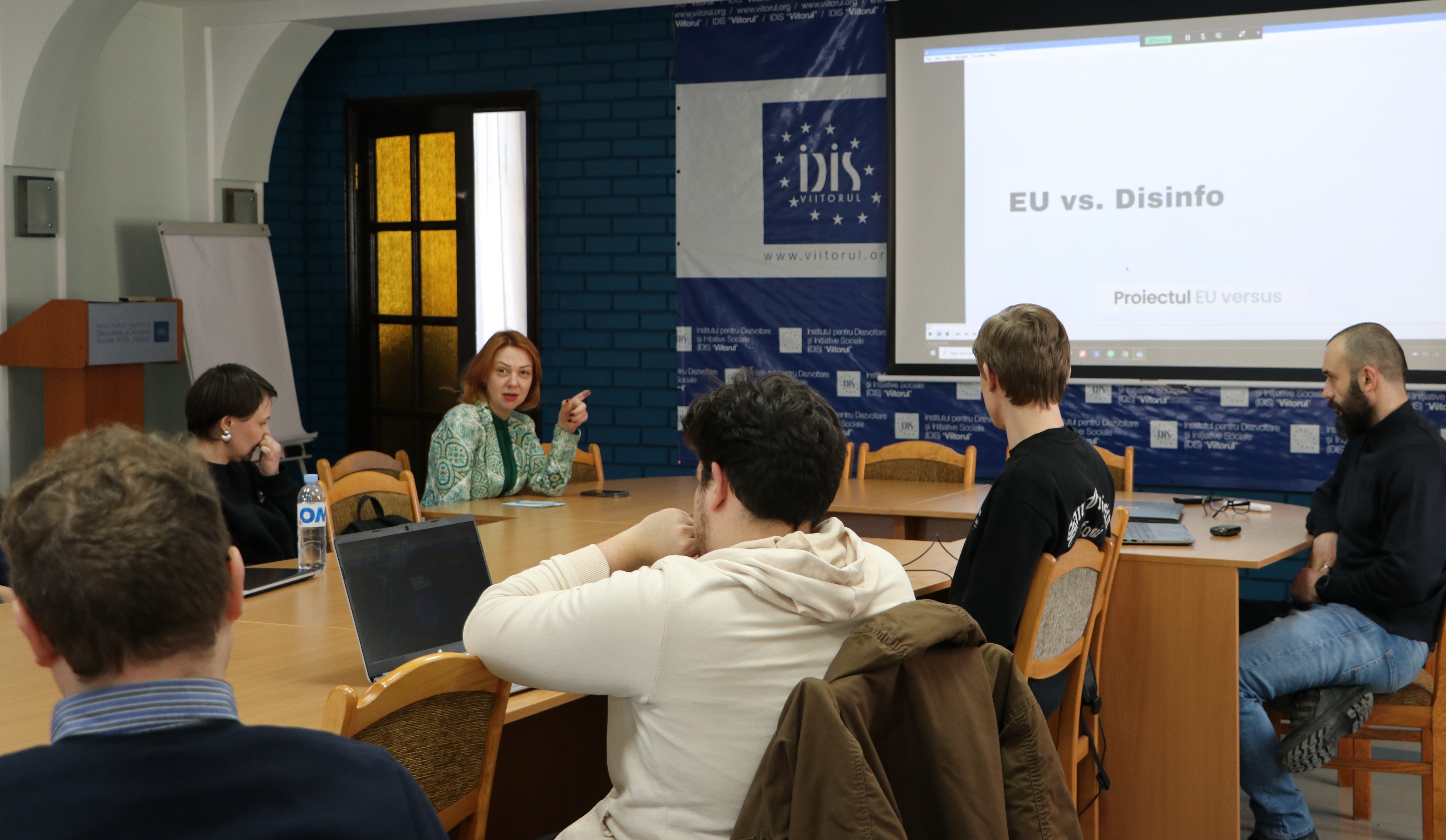
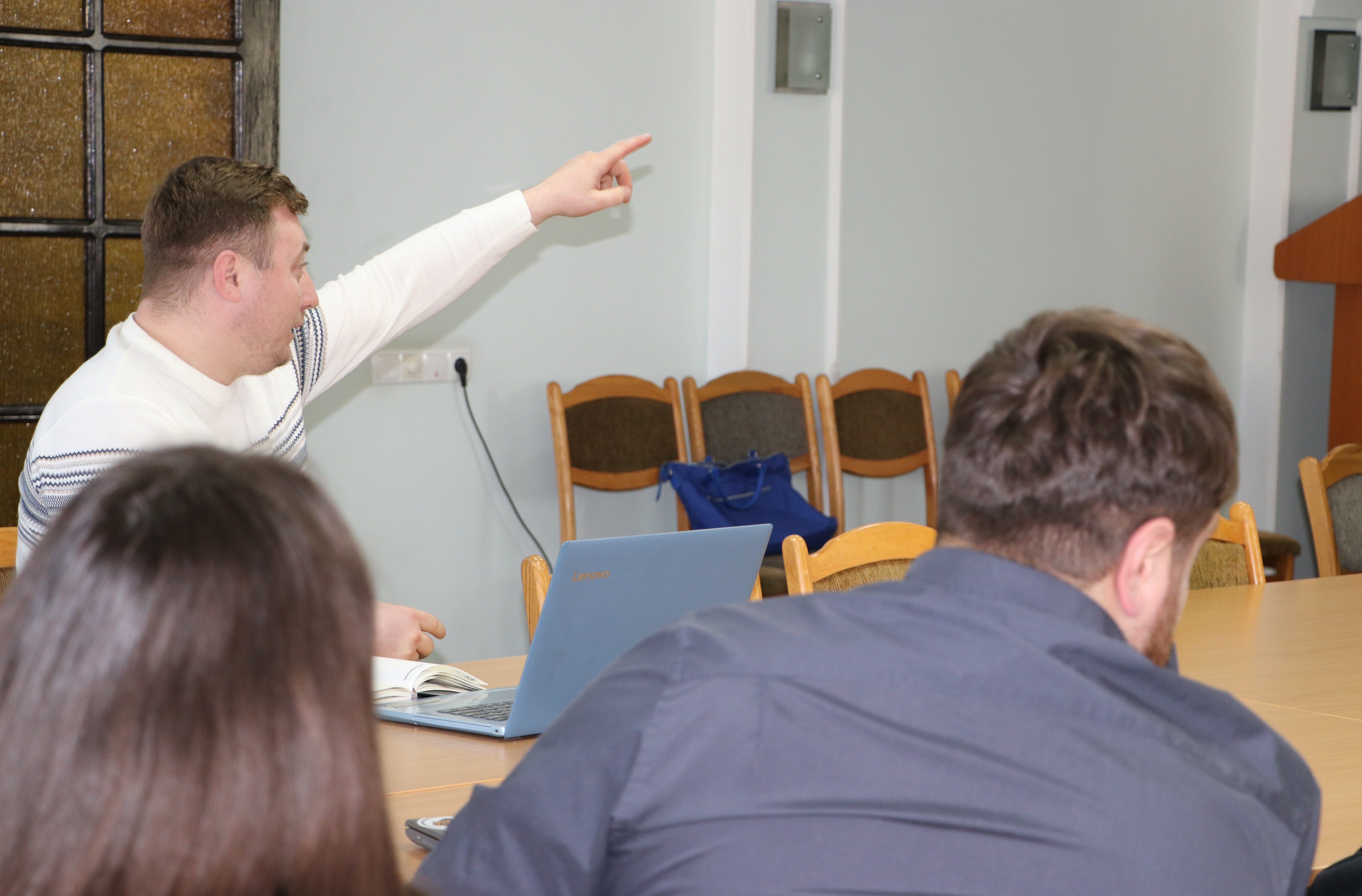
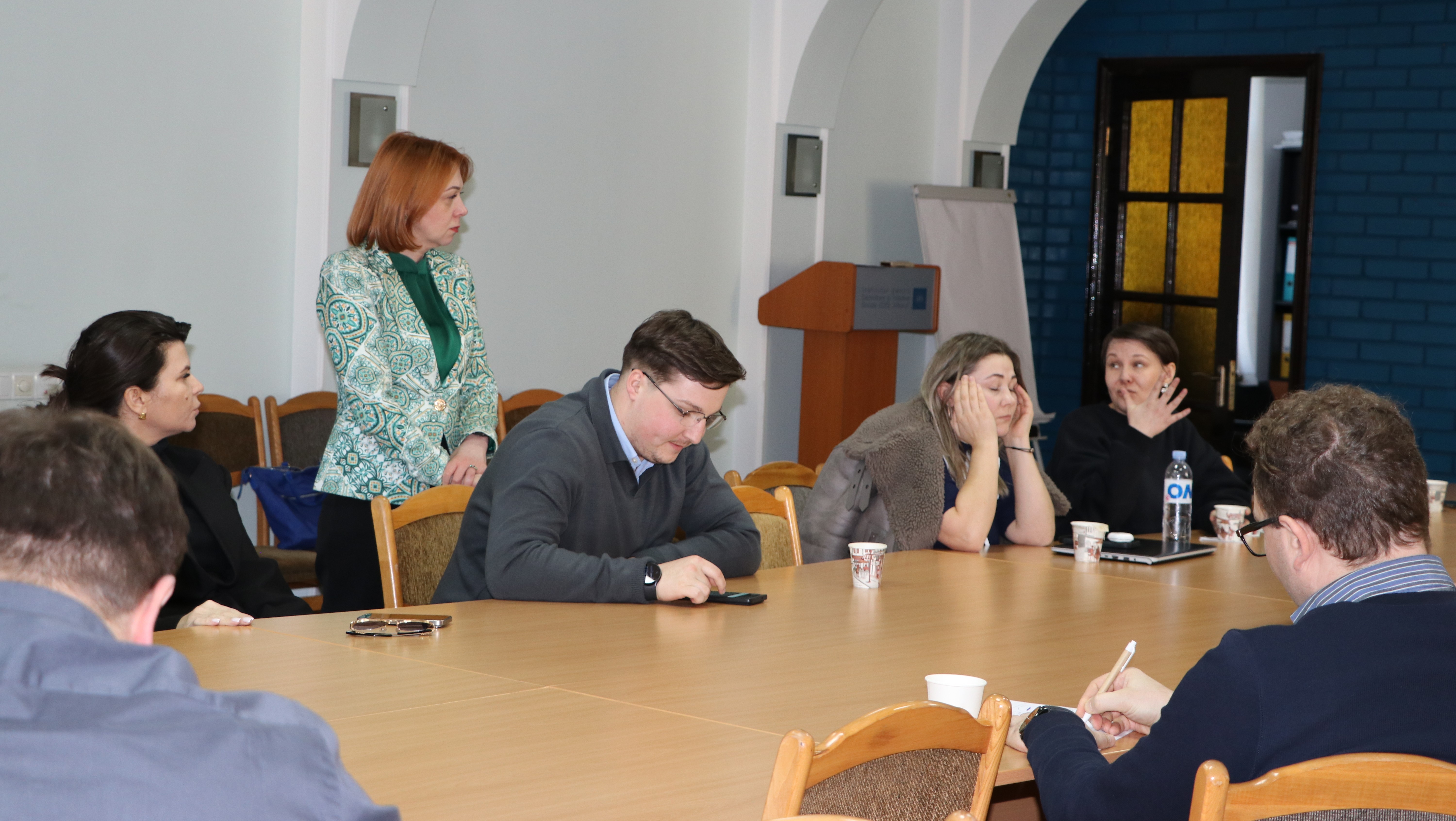
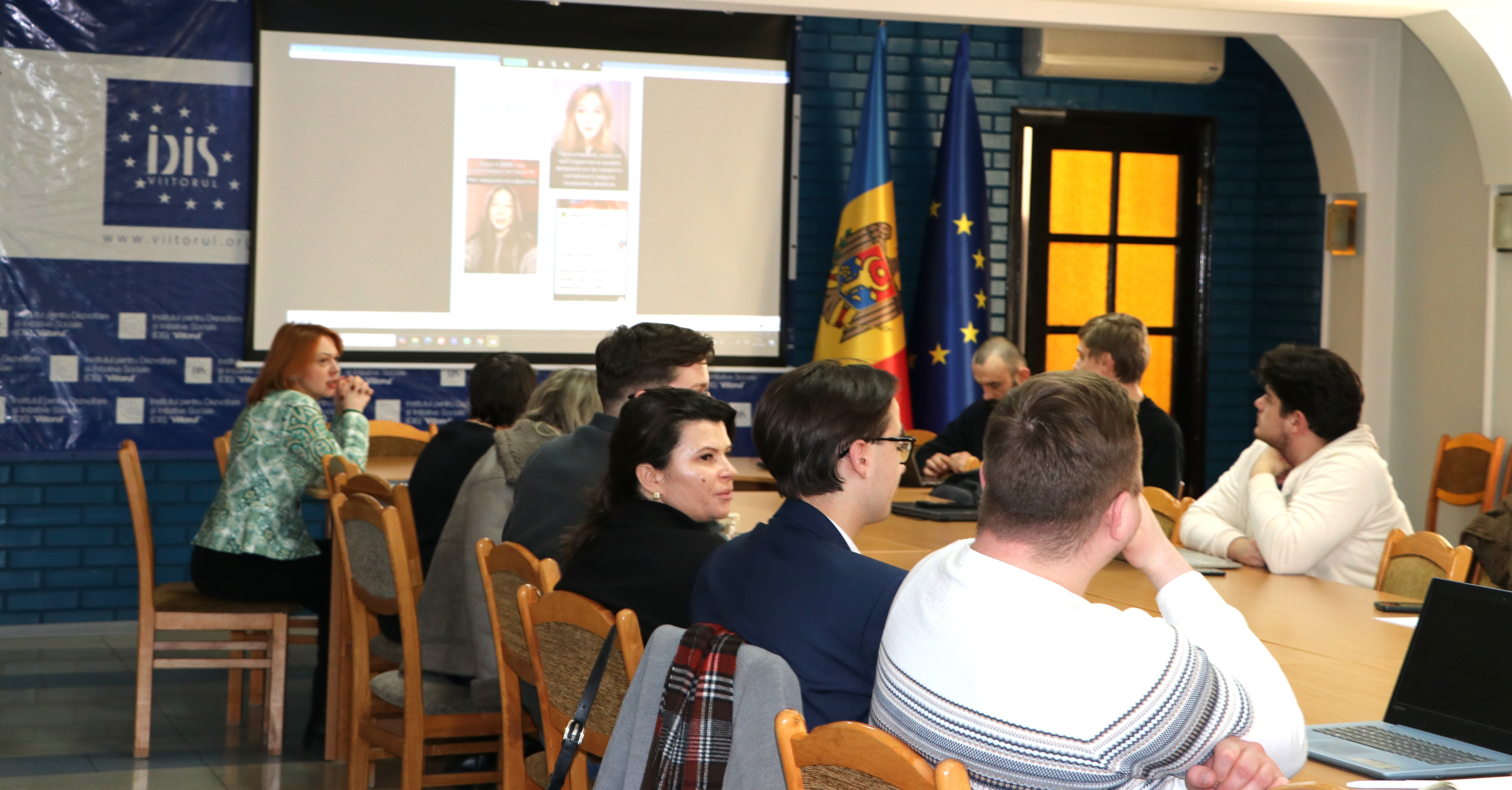
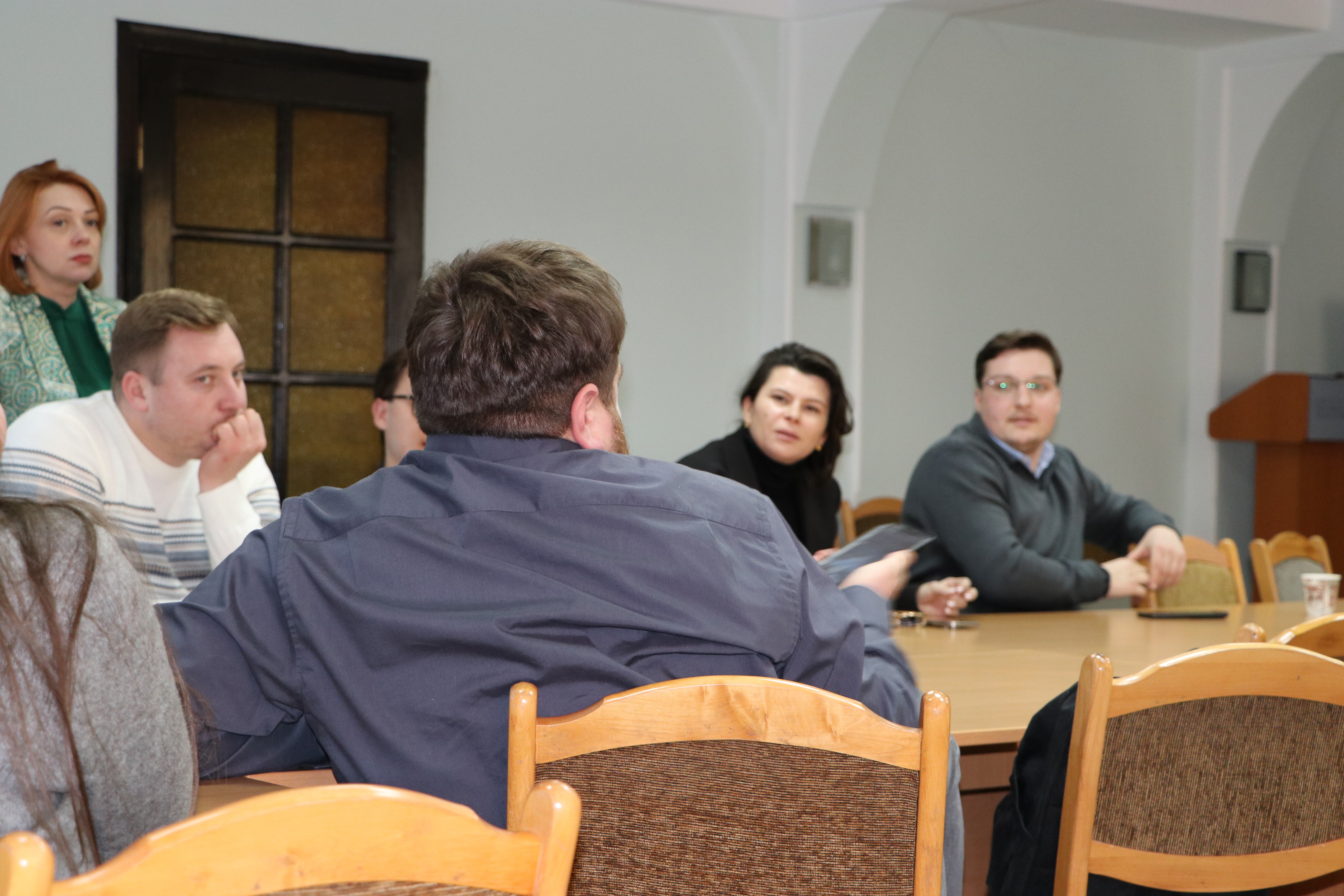
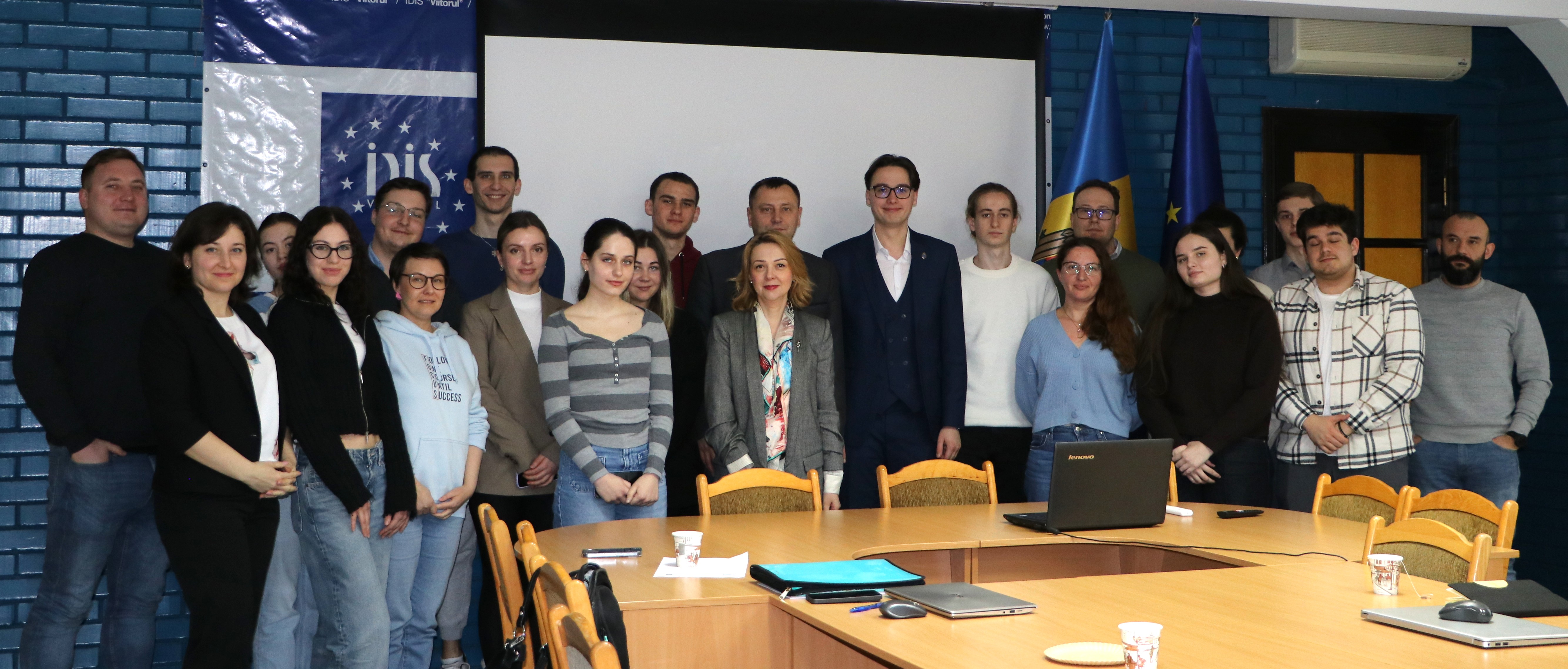
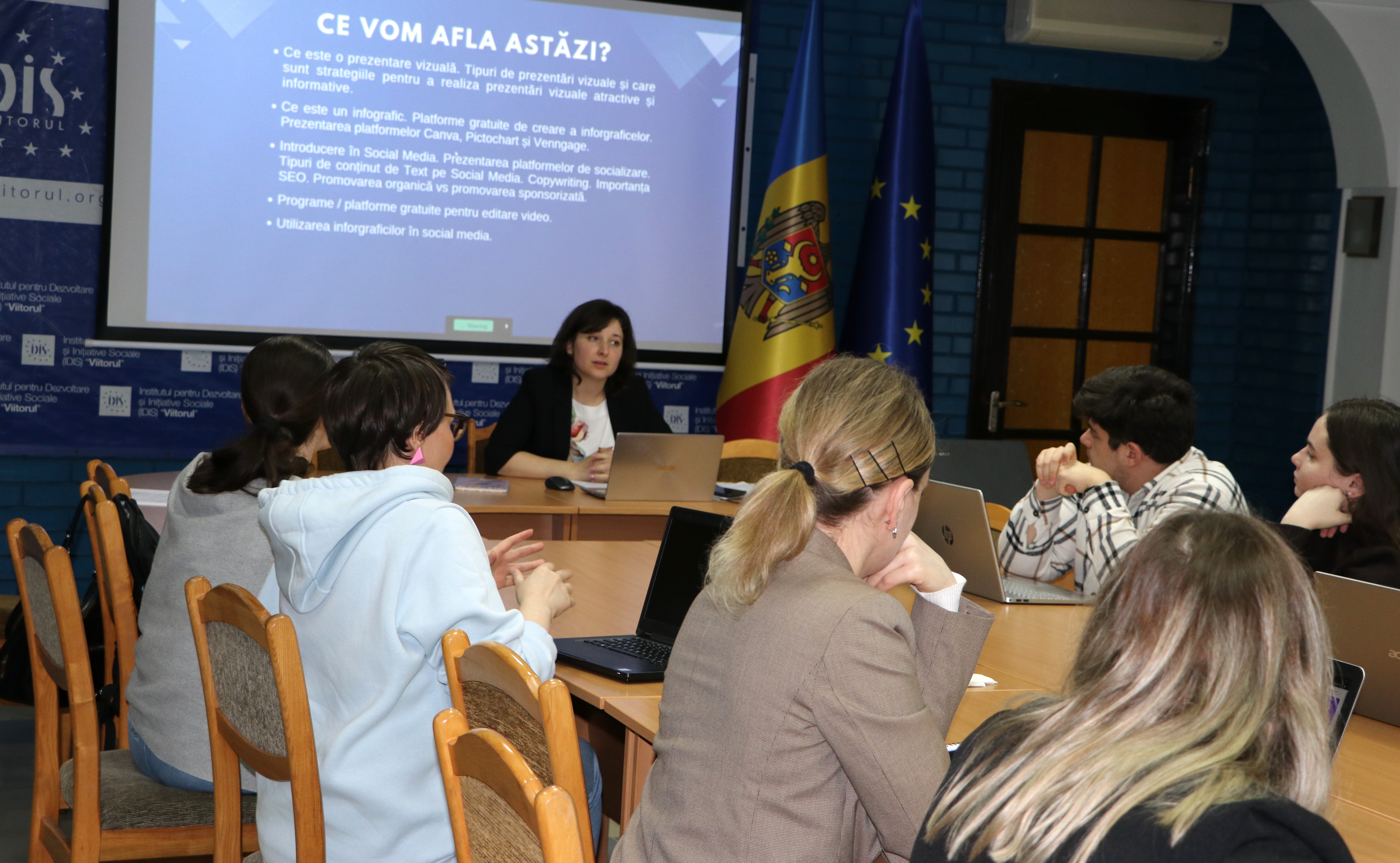
The Institute for Development and Social Initiatives "Viitorul" (IDIS) organized on Thursday, December 18, 2025, the closing event of the ”Strengthen societal resilience against disinformation during the 2025 parliamentary elections in Moldova” project. It was implemented with the financial support of the European Union (EU) within the regional project “ProElect – Promote accountability in Electoral processes in EaP through increased participation and capacity of civic actors” is a regional project run by the Transatlantic Foundation in partnership with IREX Europe (doing business as Equal Rights and Independent Media - ERIM).
As part of the project, IDIS "Viitorul" broadcast 23 video materials between June and September 2025. These address current topics of debate, necessary for the future of the Republic of Moldova, indicate the presence of narratives specific to propaganda, but also classic themes used in anti-EU and pro-Russia disinformation campaigns, formulations that raise suspicions and induce anxiety regarding the future of the country, but also suggest that the public is exposed to contradictory and dubious information. The video materials were published on the IDIS "Viitorul" website (viitorul.org) and disseminated on social networks: Facebook, Instagram, YouTube, Telegram, Linkedin, TikTok.
All materials have accumulated: 1 672 397 views; impact – 944 233; 854 407 – results; 16 877 – likes; 2440 comments, and 1973 shares. On Facebook, the most liked video was – Did the Government close 20 television stations?; the most comments were – Is Mărculești Airport going to become a military base?; the most shares were – False: “Direct supply of cheap gas from Russia is a real solution!”; the most views were – What will happen to Moldovan lands after joining the EU?; the most results were – Did the Government close 20 television stations?; and the biggest impact was – Is Mărculești Airport going to become a military base?. On Instagram, Did the Government Close 20 Television Channels? – most likes.
On YouTube, how much does disinformation cost, and who does it cost? The paradox in the Gagauzia Autonomous Region: record EU investments, record anti-EU hostility! – most likes and most views. On TikTok, False: "Direct supply of cheap gas from Russia is a real solution!" – most likes; What does rapprochement with the EU mean for the territorial integrity of the Republic of Moldova? – most views: What will happen to Moldovan lands after joining the EU? – most comments; and False: "Direct supply of cheap gas from Russia is a real solution!" – was most favorited. On LinkedIn, what happens if you don't vote? – most views. On Telegram, False: The Metropolitanate of Bessarabia is "traitorous" and a tool of the "decadent West" – most views.
The completion of this project is an important step in IDIS "Viitorul"'s ongoing efforts. We strive to strengthen Moldovan society's resilience against disinformation, especially during sensitive periods such as the upcoming September parliamentary elections. Through our activities, we believe we have helped citizens better recognize and counter false or manipulative information. We also seek to promote a culture of critical thinking and accurate information," noted Carolina Ungureanu, project manager.
"Through the content created, we aimed to encourage citizens to check sources and think critically, especially in an electoral context. I believe that these materials will remain relevant even after the project ends, contributing in the long term to society's media education," said Snejana Jitari, content creator.
"The project helped us develop our professional skills and better understand the impact that disinformation can have on citizens' decisions," said Silviu Plopa, content creator.
"The project has demonstrated that results can be achieved in the field of combating disinformation, but this is something that needs to be continued because the disinformation phenomenon is dynamic and continuously evolving," said Mihai Țurcanu, the project coordinator from IDIS "Viitorul".
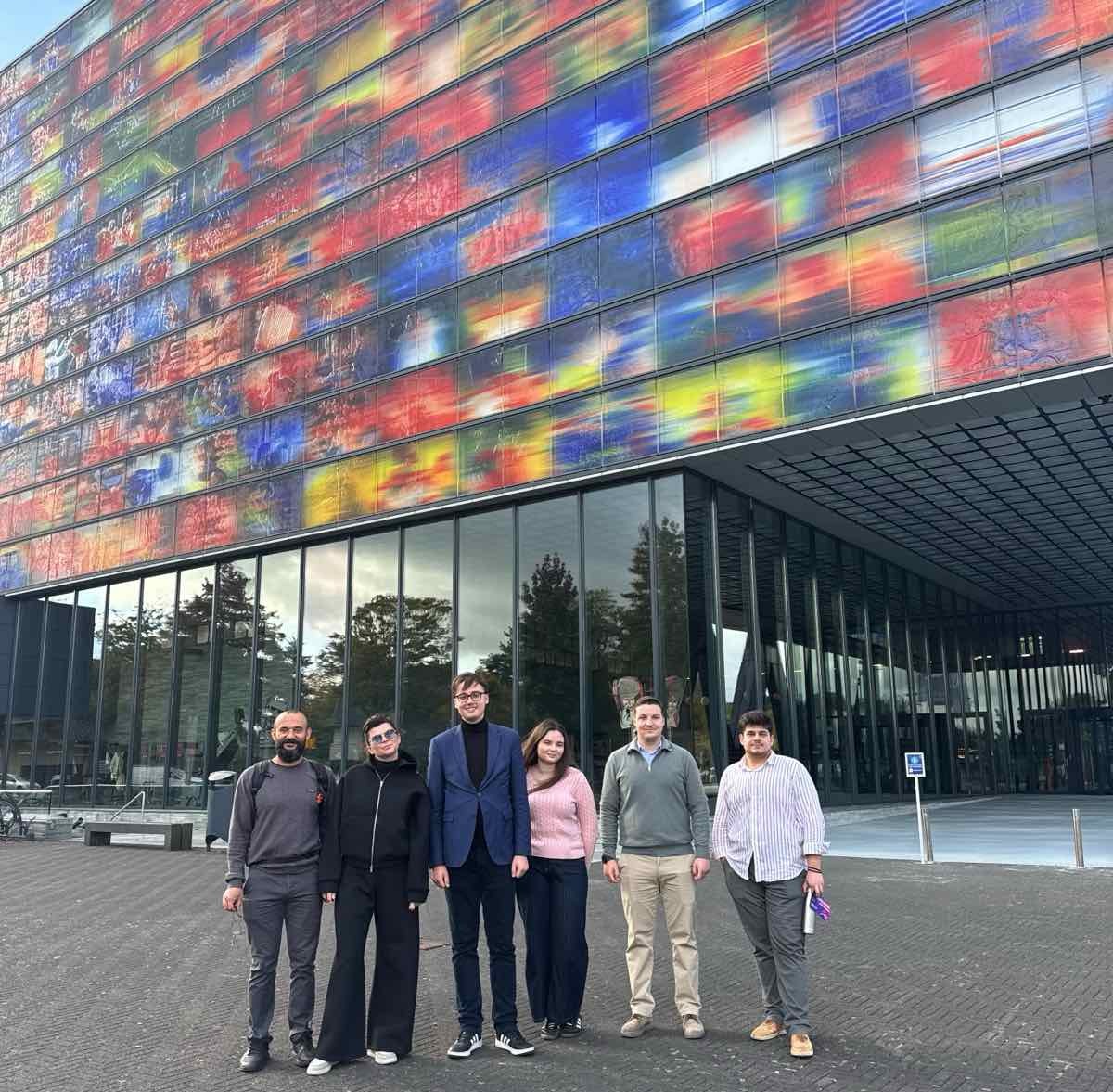
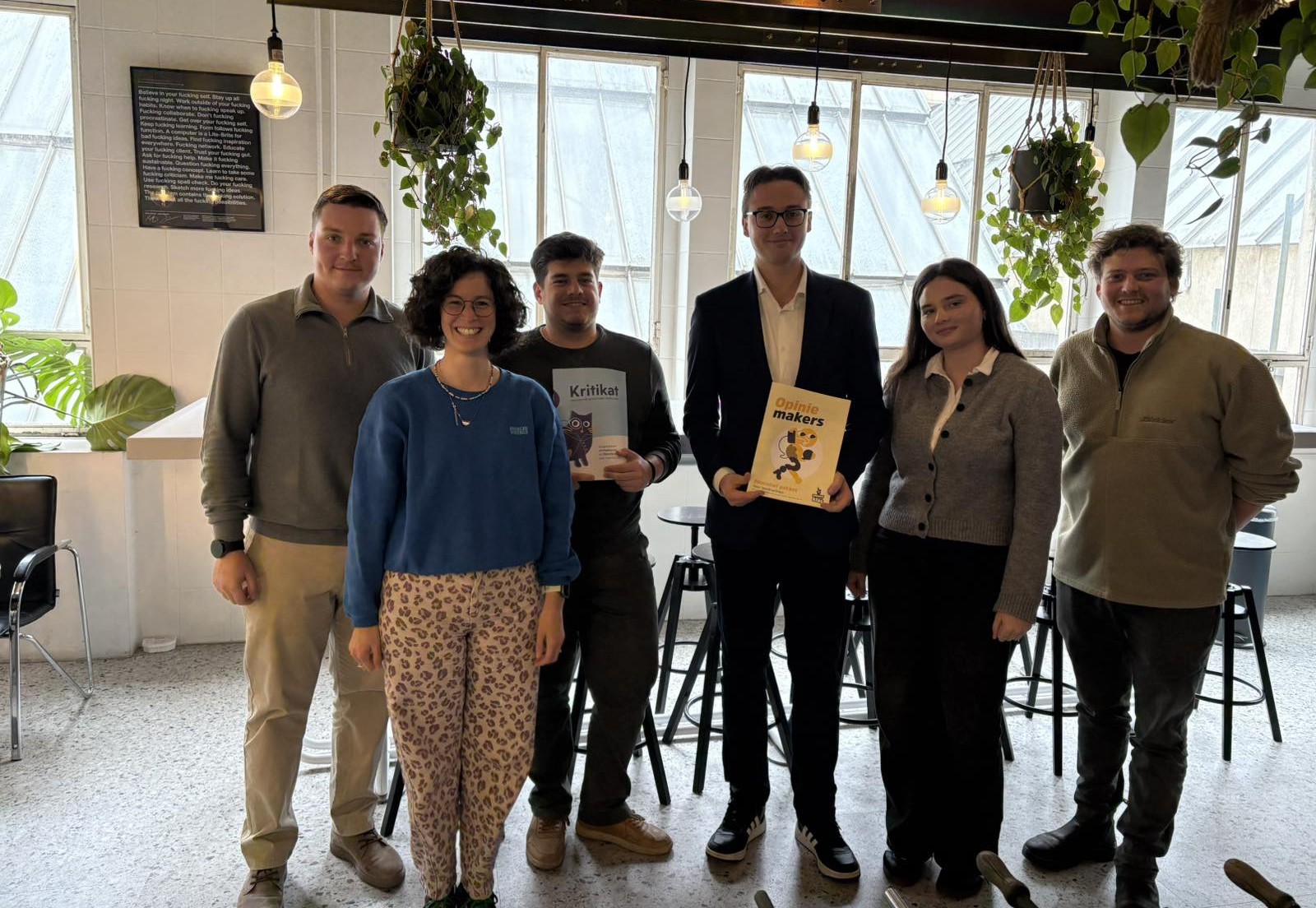
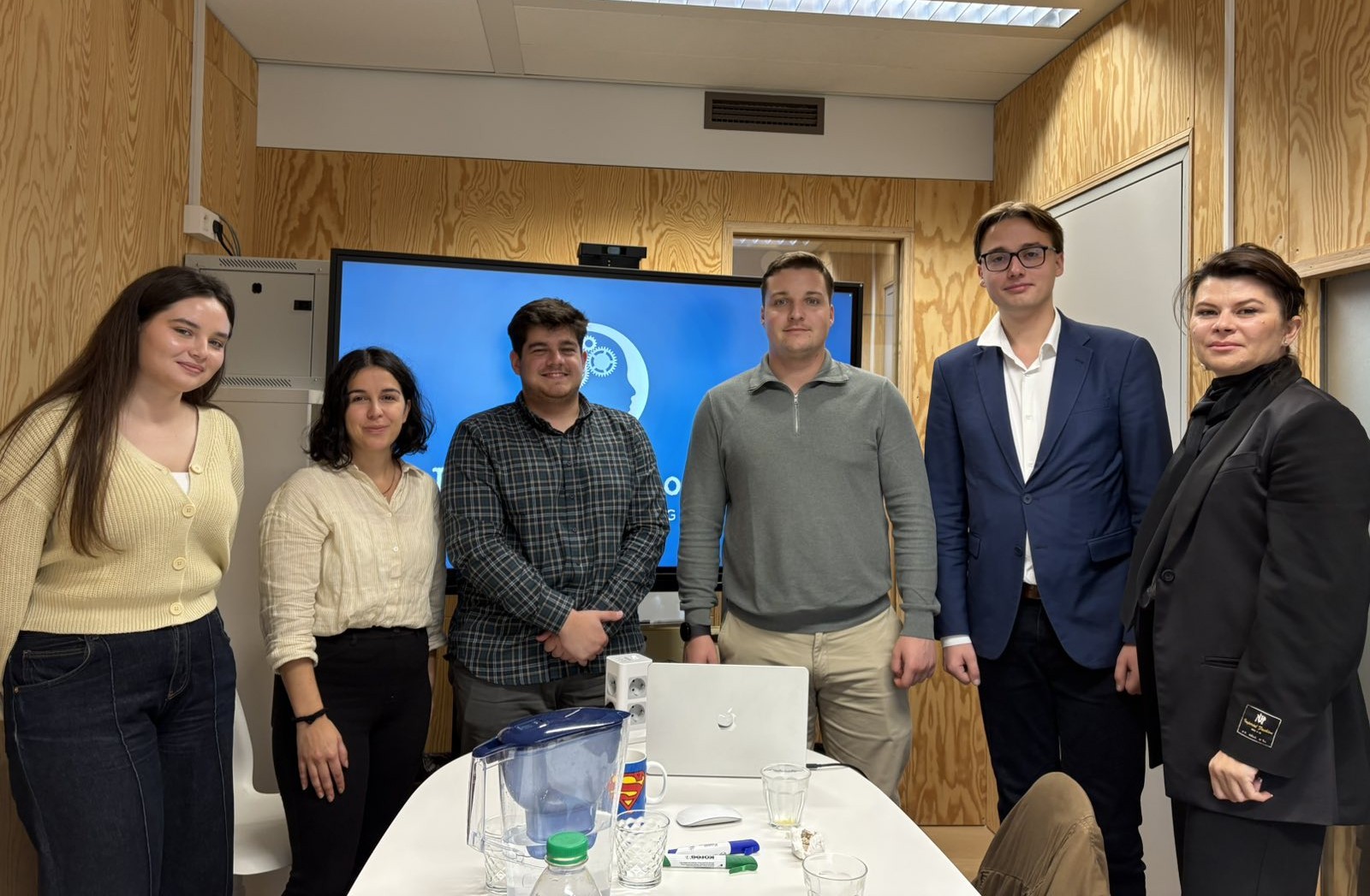
As part of the project, at the beginning of October 2025, the five content creators conducted a study visit to Belgium and the Netherlands, dedicated to learning good practices in the field of combating disinformation and promoting media literacy, part of the efforts to strengthen the resilience of the information society in the Republic of Moldova.
This press release has been produced with the financial support of the European Union. Its contents are the sole responsibility of the project ”Strengthen societal resilience against disinformation during the 2025 parliamentary elections in Moldova”, and do not necessarily reflect the views of the European Union.
The project entitled ”Strengthen societal resilience against disinformation during the 2025 parliamentary elections in Moldova” was carried out between June and December 2025 and implemented by IDIS "Viitorul," with the financial support of the European Union (EU) within the regional project “ProElect - Promote accountability in Electoral processes in EaP through increased participation and capacity of civic actors” is a regional project run by the Transatlantic Foundation in partnership with IREX Europe (doing business as Equal Rights and Independent Media - ERIM).
The Institute for Development and Social Initiatives "Viitorul" (IDIS) organized a study visit to Belgium and the Netherlands from October 6-10, 2025, for five young people, who made 23 videos, through which they addressed the phenomenon of disinformation in the context of the parliamentary elections that took place on September 28, 2025, in the Republic of Moldova. The goal of the study visit was to learn about good practices in combating disinformation and promoting media literacy, as part of efforts to strengthen the resilience of the information society in the Republic of Moldova.
The activity was conducted within the "Strengthening society's resilience against disinformation during the 2025 parliamentary elections in the Republic of Moldova" project, implemented by IDIS "Viitorul", with the financial support of the European Union (EU) within the regional project "ProElect - Promote accountability in Electoral processes in EaP through increased participation and capacity of civic actors", a regional project run by the Transatlantic Foundation in partnership with IREX Europe (doing business as Equal Rights and Independent Media - ERIM).
Over the five days, the youth team visited Mediawijs (https://www.mediawijs.be/en ), a thriving Brussels-based center for media education. Here, participants learned how digital education and critical thinking are integrated into the school curriculum through interactive materials, games, and workshops for young people and teachers, which could be adapted in the Republic of Moldova by taking over existing materials and developing a national center for media literacy, in partnership with the Ministry of Education, to provide similar training and pedagogical resources.
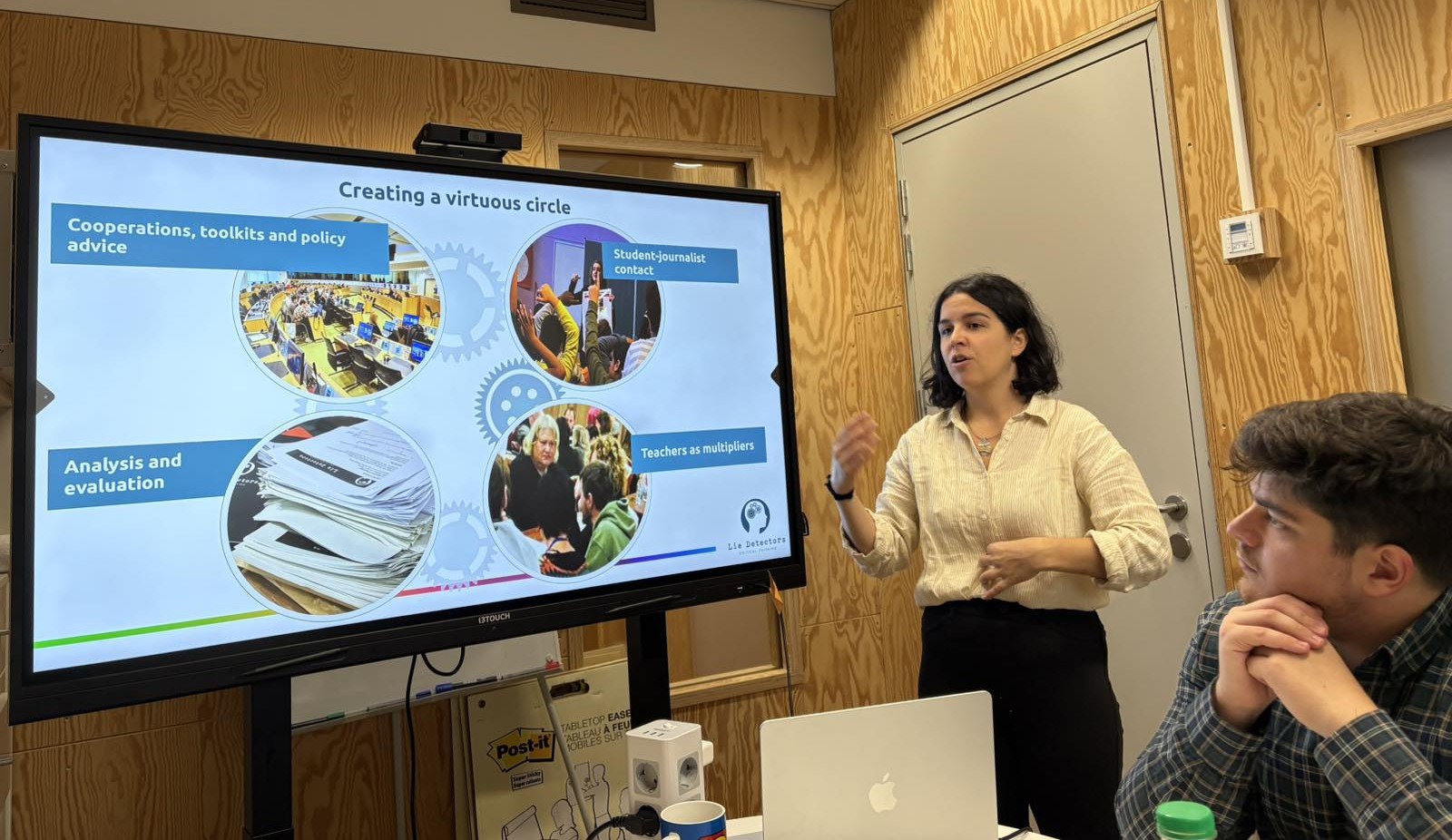
Also in Brussels, young people visited Lie Detectors (https://www.lie-detectors.org ), a remarkable example of collaboration between professional journalists and teachers, aimed at building fake news recognition skills from school onwards. The practice could be replicated in the Republic of Moldova by creating a network of journalist trainers, who would hold lessons in high schools and universities, with the support of independent media organizations, during optional media education classes.
At the Netherlands Institute for Sound and Image in Hilversum (https://www.beeldengeluid.nl/en/about), the team led by IDIS "Viitorul" became familiar with how audiovisual archives and media heritage are used in educational projects and awareness campaigns on disinformation. In the Republic of Moldova, public institutions and NGOs could capitalize on existing media collections to create visual campaigns and educational exhibitions dedicated to media memory and the role of accurate information in society.
"Following the visits, I reflected on the international and local information space. I understood that to start a change related to "media literacy" in the long term, we must start at a young age, to ensure that future generations will critically consume content from the online environment. Certainly, the dose of inspiration I took from this visit will take root through my continued involvement in civil society," said Radu Soltan, content creator, participant in the study visit.
"This experience was a valuable one. In Belgium and the Netherlands, I better understood how media institutions and civil society collaborate to prevent the spread of false information. I was impressed by the responsibility with which journalists verify sources and by the way the public is educated to think critically. I return home with the desire to apply these good practices in the Republic of Moldova," says Natalia Vacaru-Iasibaș, content creator, participant in the study visit.
"The visit gave us insight into how established democracies manage disinformation during election periods. We had the opportunity to talk to experts, journalists, and activists who showed us how important media education is for an informed electorate. The experience motivated me to contribute to creating a safer and more transparent information space at home," said Mihail Nesteriuc, content creator and participant of the study visit.
"In the West, actors involved in combating disinformation place the main emphasis on education from the earliest ages. This fact reflects both the level of education and culture of those societies and their greater distance from the main sources and promoters of disinformation. For the Republic of Moldova, this experience shows that investing in media education is the safest form of democratic resilience in a long term perspective, said Mihai Țurcanu, coordinator of the study visit from IDIS "Viitorul".
IDIS "Viitorul" broadcast 23 video materials between June and September to combat disinformation on specific topics related to the parliamentary elections held on September 28, 2025, in the Republic of Moldova. The videos have been createdby the young people who went on a study visit to Belgium and the Netherlands. The 23 video materials were published on the IDIS "Viitorul" website, but also disseminated on the social networks managed by IDIS "Viitorul": viitorul.org, Facebook, Instagram, YouTube, Telegram, Linkedin, TikTok.
The project aimed to contribute, in the context of the parliamentary elections, to reversing the current harmful trend of Russian propaganda and disinformation, which is taking control of the public discourse in the Republic of Moldova with relatively small investments and despite all the tangible advantages that Moldova has, and has had, in its relationship with the EU.
This press release has been produced with the financial support of the European Union. Its contents are the sole responsibility of the project ”Strengthen societal resilience against disinformation during the 2025 parliamentary elections in Moldova”, and do not necessarily reflect the views of the European Union.
The project entitled ”Strengthen societal resilience against disinformation during the 2025 parliamentary elections in Moldova” is being carried out between June and December 2025 and is implemented by IDIS "Viitorul," with the financial support of the European Union (EU) within the regional project “ProElect - Promote accountability in Electoral processes in EaP through increased participation and capacity of civic actors” is a regional project run by the Transatlantic Foundation in partnership with IREX Europe (doing business as Equal Rights and Independent Media - ERIM).
IDIS “Viitorul” is an independent think tank established in 1993 that combines social, political and economic research with strong advocacy components. The institution conducts applied monitoring research in several areas: economics, social policy, EU policies, regional development, and security and foreign policy risks.
Follow us on: Facebook; Instagram; Linkedin; Telegram; Youtube; Tiktok.
The Institute for Development and Social Initiatives "Viitorul" (IDIS) broadcast 23 video materials between June and September 2025 to combat disinformation related to specific topics surrounding the parliamentary elections held on September 28, 2025, in the Republic of Moldova. A group of young content creators created the videos as part of the project "Strengthening society's resilience against disinformation during the 2025 parliamentary elections in the Republic of Moldova", with the financial support of the European Union (EU) within the regional project "ProElect - Promote accountability in Electoral processes in EaP through increased participation and capacity of civic actors" is a regional project run by the Transatlantic Foundation in partnership with IREX Europe (doing business as Equal Rights and Independent Media - ERIM).
The 23 videos address current topics of debate, necessary for the future of the Republic of Moldova, indicate the presence of narratives specific to propaganda, but also classic themes used in anti-EU and pro-Russia disinformation campaigns, formulations that raise suspicions and induce anxiety regarding the future of the country, but also suggest that the public is exposed to contradictory and dubious information. Fear and insecurity are cultivated through false narratives about militarization and war, through false narratives about the loss of traditions or the "betrayal" of the church, but also through speculation regarding strategic infrastructure.
The videos emphasize the significance of citizen engagement in elections and the risks associated with voter absenteeism. They also draw attention to the role of online manipulation and fake news in eroding trust in institutions. It also reflects how national security is exploited for manipulation. The videos also analyze how the advantages and disadvantages of EU orientation vs. dependence on Russia are presented. In particular, it highlights manipulation tactics that fuel fears of losing sovereignty or traditional markets, undermining trust in the EU, creating internal divisions, and presenting Russia as a "savior alternative."
"In the process of making the videos, I noticed that, during the election period, disinformation was used not only to manipulate opinions, but also to induce panic and destabilize the situation in the country. Through these materials, I tried to present the mechanisms behind the phenomenon and to provide the public with useful information to help them recognize fake news. I am convinced that only through accurate information and by cultivating critical thinking can we strengthen society's resilience in the face of manipulation," says Snejana Jitari, one of the content creators.
"My involvement in the development of these materials, aimed at combating disinformation during this period, came from the desire to support correct information and to increase awareness of the risks generated by Russian influences in the information space of the Republic of Moldova. Me, You, We All can make the change, not through indifference," says Radu Soltan, content creator.
"All the videos we made addressed one issue: the economic dependence and vulnerability of the Republic of Moldova towards Russia. They outlined a narrative framework that explained the transition of the Republic of Moldova from a traditional dependence on Russia towards market diversification and EU integration for the benefit of the Republic of Moldova's economy," said Silviu Plopa, also a content creator.
"These videos are not simple communication exercises, but part of a broader effort to protect the information space of the Republic of Moldova during a crucial moment for the future of the country. Our role, as an organization, was to provide young content creators with a framework and the necessary tools to dismantle false narratives and explain to the public the subtle mechanisms of disinformation. I believe that these 23 materials represent not only a timely reaction to electoral campaigns but also an investment in strengthening civic culture and citizens' trust in democratic institutions. Given the internal and external context, such efforts should be made permanently and without interruption, not only during electoral periods," said Mihai Țurcanu, the project coordinator.
The 23 video materials were published on the IDIS "Viitorul" website, but also disseminated on the social networks managed by IDIS "Viitorul": viitorul.org, Facebook, Instagram, YouTube, Telegram, Linkedin, TikTok.
The project, in the context of the parliamentary elections that were held on September 28, 2025, aimed to contribute to reversing the current harmful trend of Russian propaganda and disinformation, which is taking control in the Republic of Moldova with relatively small investments and despite all the tangible advantages that Moldova has and has had in its relationship with the EU. The presidential elections and the referendum in 2024 were the target not only of attempts at fraud through corruption, but also of Russian propaganda, seeking to convince voters to vote for Russian representatives and vote against the referendum on Moldova's accession to the EU.
Through the project, IDIS "Viitorul" aims to enhance the critical thinking skills of society in the Republic of Moldova, improve media literacy, and increase public awareness in the context of the parliamentary elections held on September 28.
This press release has been produced with the financial support of the European Union. Its contents are the sole responsibility of the ”Strengthen societal resilience against disinformation during the 2025 parliamentary elections in Moldova” project, and do not necessarily reflect the views of the European Union.
The project entitled ”Strengthen societal resilience against disinformation during the 2025 parliamentary elections in Moldova” is being carried out between June and December 2025 and is implemented by IDIS "Viitorul," with the financial support of the European Union (EU) within the regional project “ProElect - Promote accountability in Electoral processes in EaP through increased participation and capacity of civic actors” is a regional project run by the Transatlantic Foundation in partnership with IREX Europe (doing business as Equal Rights and Independent Media - ERIM).
IDIS “Viitorul” is an independent think tank established in 1993 that combines social, political and economic research with strong advocacy components. The institution conducts applied monitoring research in several areas: economics, social policy, EU policies, regional development, and security and foreign policy risks.
Follow us on: Facebook; Instagram; Linkedin; Telegram; Youtube; Tiktok.
The Institute for Development and Social Initiatives "Viitorul" (IDIS) has launched ten video products that misinform on specific topics related to the September 2025 parliamentary elections in the Republic of Moldova. The videos are made by a group of five young content creators, as part of the ”Strengthen societal resilience against disinformation during the 2025 parliamentary elections in Moldova” project, through which IDIS "Viitorul" aimed to increase the critical thinking skills of society in the Republic of Moldova, improve media literacy, but also public awareness in the context of the 2025 election year.
The 10 video materials were published on the website and social networks managed by IDIS "Viitorul", such as: viitorul.org, Facebook, Instagram, YouTube, Telegram, Linkedin, TikTok. As part of the project, by September 28, 2025, 13 additional video materials will be developed, analyzing and debating the challenges facing the Republic of Moldova on the eve of the parliamentary elections.
The videos already released address current topics of debate, essential for the future of the Republic of Moldova, and indicate the presence of narratives specific to propaganda. Still, classic themes are also used in anti-EU and pro-Russia disinformation campaigns, formulations that raise suspicions and induce anxiety regarding the future of the country, but also suggest that the public is exposed to contradictory and dubious information. The themes address emotionally and politically charged topics, such as elections, military security, land ownership, foreign relations, and cultural identity.
1) What can happen if you don't vote?
2) Mărculești Airport could become a military base?
3) What will happen to Moldovan lands after joining the EU?
4) Why are Moldova's economic relations with the Russian Federation worsening?
5) What does rapprochement with the EU mean for the territorial integrity of the Republic of Moldova?
6) How to get informed correctly before the elections!
7) Did the Government close 20 television stations?
8) Does the EU impose certain ideologies through reforms?
9) Russian embargoes: what do we have to lose and what do we have to gain?
10) Is the EU destroying our culture?
The project aims, in the upcoming electoral context, to contribute to reversing the current harmful trend of Russian propaganda and disinformation, which is gaining control in the Republic of Moldova with relatively small investments despite the Republic of Moldova's tangible advantages and its long-standing relationship with the EU. The 2024 presidential elections and constitutional referendum were the target not only of attempted fraud through corruption but also of Russian propaganda, seeking to convince voters to vote for Russian representatives and say no to the referendum on Moldova's accession to the EU.
Young people actively participate in monthly hackathons organized by IDIS "Viitorul", presenting video products for approval and analysis by IDIS "Viitorul" experts. These products are then improved through constructive discussions and subsequently promoted on the organization's social media for public communication.
This press release has been produced with the financial support of the European Union. Its contents are the sole responsibility of the ”Strengthen societal resilience against disinformation during the 2025 parliamentary elections in Moldova” project, and do not necessarily reflect the views of the European Union.
The project entitled ”Strengthen societal resilience against disinformation during the 2025 parliamentary elections in Moldova” is being carried out between June and December 2025 and is implemented by IDIS "Viitorul," with the financial support of the European Union (EU) within the regional project “ProElect - Promote accountability in Electoral processes in EaP through increased participation and capacity of civic actors” is a regional project run by the Transatlantic Foundation in partnership with IREX Europe (doing business as Equal Rights and Independent Media - ERIM).
IDIS “Viitorul” is an independent think tank established in 1993 that combines social, political and economic research with strong advocacy components. The institution conducts applied monitoring research in several areas: economics, social policy, EU policies, regional development, and security and foreign policy risks.
Follow us on: Facebook; Instagram; Linkedin; Telegram; Youtube; Tiktok.
The Institute for Development and Social Initiatives (IDIS) "Viitorul" has launched a new project on disinformation, through which it aims to increase, through a digital campaign, the critical thinking skills of the society in the Republic of Moldova to improve media literacy, but also the level of public awareness in the context of the 2025 election year. As part of the project, several video contents will be created to address disinformation related to the September 2025 parliamentary elections in the Republic of Moldova.
The project entitled ”Strengthen societal resilience against disinformation during the 2025 parliamentary elections in Moldova” is being carried out between June and December 2025 and is implemented by IDIS "Viitorul," with the financial support of the European Union (EU) within the regional project “ProElect - Promote accountability in Electoral processes in EaP through increased participation and capacity of civic actors” is a regional project run by the Transatlantic Foundation in partnership with IREX Europe (doing business as Equal Rights and Independent Media - ERIM).
The project aims, in the upcoming electoral context, to contribute to reversing the current harmful trend of Russian propaganda and disinformation, which is gaining control in the Republic of Moldova with relatively small investments despite the Republic of Moldova's tangible advantages and its long-standing relationship with the EU. The 2024 presidential elections and constitutional referendum were the target not only of attempted fraud through corruption but also of Russian propaganda, seeking to convince voters to vote for Russian representatives and say no to the referendum on Moldova's accession to the EU.
In the first phase of the project, a working group of 5 young content producers was created, who will monitor electoral disinformation trends on social media platforms until the elections. The young people participated on Tuesday, June 10, 2025, in a workshop where the project's context, objectives, expectations, activities, tasks, targeted narratives, potential actors, work schedule, and other relevant details were explained to them. In the coming period, young people will participate in several hackathons, where they will present the video content they have created, which will later be promoted on social networks for communication with the public of IDIS "Viitorul."
"The materials that will be created are aimed at dismantling the disinformation that appears on the eve of the electoral campaign. We understand that a period with sufficient challenges is ahead that targets the information space in the Republic of Moldova," said Radu Soltan, a member of the working group.
"Today, there is a growing need for activities to combat the negative effects of information manipulation and promote an informed society. It is our responsibility, everyone's, to contribute to a safer future," said Snejana Jitari, a member of the working group.
"Through these interactive materials, we aim to inform citizens about the dangers of manipulation, fake news, and propaganda that aims to divide society," said Mihail Nesteriuc, a member of the working group.
"We are pleased to participate in the ProElect initiative - Promoting accountability in electoral processes through increased involvement of civic actors, at an essential moment for the consolidation of democracy in the Republic of Moldova. Our project comes as a direct response to the growing threats of disinformation and hate speech that taint the electoral space and affect free elections. Through this first workshop, we bring together young content creators and experienced experts to build an active core of monitoring, reaction, and accurate information, which will help citizens make informed decisions. It is an essential step in our effort to strengthen the resilience of Moldovan society and promote the values of European integration," said Carolina Ungureanu, vice-director of IDIS "Viitorul," project manager.
This press release has been produced with the financial support of the European Union. Its contents are the sole responsibility of the project ”Strengthen societal resilience against disinformation during the 2025 parliamentary elections in Moldova” and do not necessarily reflect the views of the European Union.
IDIS “Viitorul” is an independent think tank established in 1993 that combines social, political and economic research with strong advocacy components. The institution conducts applied monitoring research in several areas: economics, social policy, EU policies, regional development, and security and foreign policy risks.
Follow us on Facebook – https://www.facebook.com/IDISViitorul ;
Instagram - https://www.instagram.com/idisviitorul/;
Subscribe to the Telegram channel – https://t.me/idis93 ;
Watch us on the Youtube channel – https://www.youtube.com/@idisviitorul8539 .
The Institute for Development and Social Initiatives (IDIS) "Viitorul" implemented, between December 2024 and March 2025, the "Calling Out Disinformation and Misinformation in the Republic of Moldova" project, funded by NATO's Public Diplomacy Division.
Within the project, over 20 young people, students, representatives of civil society organizations, members of youth centers, etc., from the Republic of Moldova, participated in a practical workshop on methods of identifying and countering Russian-supported and sponsored disinformation. During the workshop, Ion Tăbîrță, Executive Director of the NATO Information and Documentation Centre in Chisinau, spoke about Russia's online disinformation campaigns against Western countries, including the Republic of Moldova.
At the same workshop, young people learned from Nina Bolocan how to create infographics and videos to counter Russian disinformation narratives. Then, the young people had to create visual materials intended to misinform about certain problems in society that persist today. Then, IDIS "Viitorul" held three hackathons, where young people presented over 20 infographics and videos.
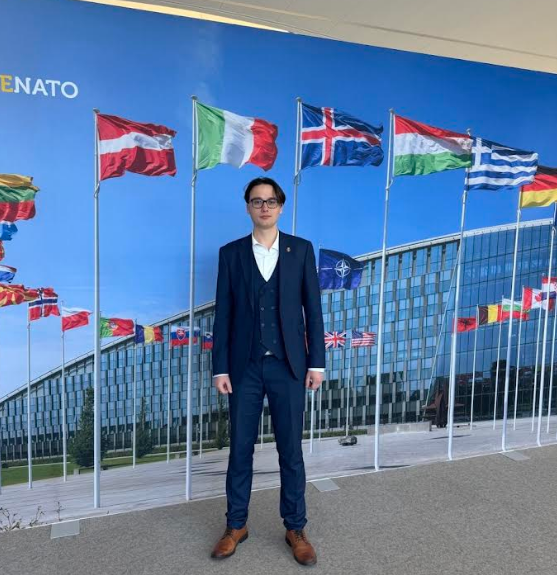
The created materials were analyzed by a team of experts from IDIS "Viitorul" and promoted on the IDIS "Viitorul" Facebook page, and the IDIS "Viitorul" Telegram account. Materials promoted between March 10-28, gathered a total of: 3036 likes, 761 comments, 634 shares, 220,988 plays, 640,225 views, and an impact for 450,875 people. Five, the most inspired participants, went on an information visit to NATO headquarters in Brussels, from March 16-20, 2025, organized by IDIS "Viitorul".
The overall objective of the "Calling Out Disinformation and Misinformation in the Republic of Moldova" project was to support the effort to counter the threats of disinformation and manipulation from the Russian Federation targeting the Republic of Moldova. The specific objective of the project was to increase the capacity of young people, students, and opinion leaders in areas such as critical thinking, media literacy, analysis, and resistance to misinformation, as well as reflecting public-interest information in an unbiased way. It also aimed to increase the resilience of Moldovan society regarding critical thinking, media literacy, and resistance to disinformation through awareness and visibility actions on social media, specifically tailored to call out Russia and its proxies' disinformation and misinformation campaigns.
***
The "Calling out disinformation and misinformation in the Republic of Moldova" project, implemented by IDIS "Viitorul", was funded by NATO's Public Diplomacy Division.
IDIS Viitorul is an independent think tank established in 1993 that combines social, political and economic research with strong advocacy components. The institution conducts applied monitoring research in several areas: economics, social policy, EU policies, regional development, and security and foreign policy risks.
Follow us on Facebook – https://www.facebook.com/IDISViitorul ;
Subscribe to the Telegram channel – https://t.me/idis93 ;
Watch us on the Youtube channel – https://www.youtube.com/@idisviitorul8539 .
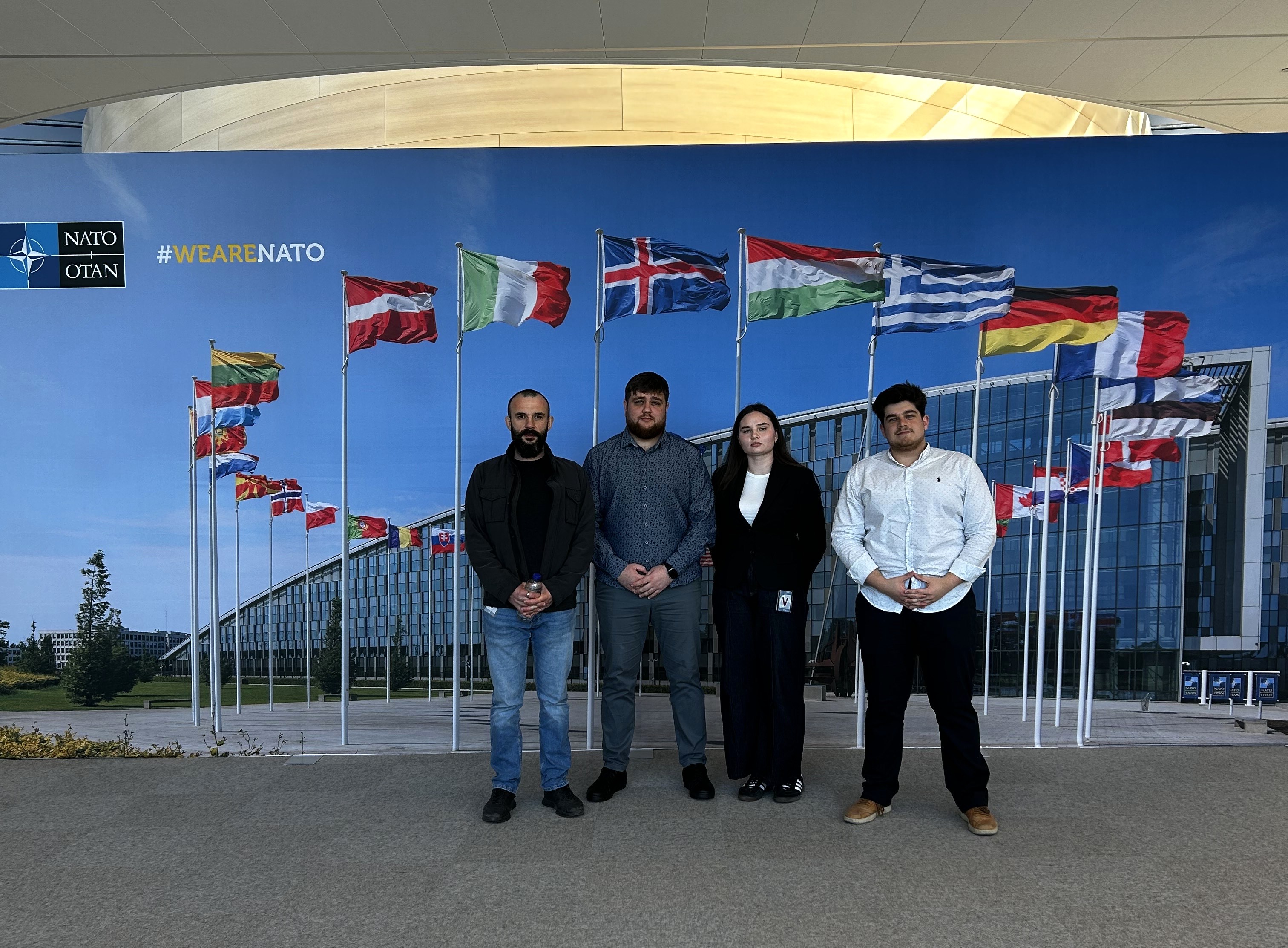
The Institute for Development and Social Initiatives (IDIS) "Viitorul" organized on March 16-20, 2025, a study visit to NATO headquarters in Brussels for a group of five young people, who created infographics and videos aimed at countering Russian disinformation narratives in the Republic of Moldova. The study visit was part of the "Calling Out Disinformation and Misinformation in the Republic of Moldova" project, funded by NATO's Public Diplomacy Division and implemented from December 2024 to March 2025 by IDIS "Viitorul".
"The visit to the NATO headquarters was a beneficial one, it gave us a deep insight into the geopolitical challenges in the region. The meetings and discussions helped us better understand NATO's role and the importance of cooperation for regional security. It was a knowledge-building experience", said Mihail Nesteriuc, a participant.
"The study visit was a valuable experience, which allowed us to better understand NATO's support to the Republic of Moldova in the fight against disinformation. Given the extent of the phenomenon in the media space (and not only) in the country, NATO's involvement is essential for strengthening efforts to combat information manipulation and contributes to deepening knowledge about the international support provided, especially in the context of the current geopolitical situation in the region", said Ruslan Graur, a participant.
"The study visit was an opportunity to better understand NATO's role in ensuring global security, but also in combating disinformation, which is a growing challenge today. We learned a lot about how NATO supports partner states in building information resilience and the mechanisms to counter media manipulation. This information is key to understanding how propaganda and fake news can influence public perceptions of international security and cooperation," said Snejana Jitari.
"A dose of inspiration came from my study visit to NATO headquarters, where, after discussions with the staff there, I reconfirmed that NATO is not only about armaments and military technology, but it is a big space where human life comes first. This is a time when the Republic of Moldova is vulnerable to mass disinformation, and NATO has shown its openness to provide the necessary support in this respect as well", said Radu Soltan, a participant.
"The visit to NATO headquarters was an opportunity for in-depth discussions on current geopolitical challenges. The information and opinions we received allowed us to better understand the strategic priorities of the Alliance and their impact on regional security", said Natalia Iasibas, a participant.
"This visit has repeatedly convinced us that the external interest in supporting the Republic of Moldova has greatly increased since 2022, but also that this interest must correspond to civil society, academia, political actors, and all citizens interested in Moldova to continue the process of European integration and rapprochement with the free European community and forward-looking international community", said Mihai Țurcanu, member of the organizing team of IDIS "Viitorul".
The project's first activity was organizing a practical workshop. Ion Tăbîrță, Executive Director of the NATO Information and Documentation Centre in the Republic of Moldova, spoke about Russia's online disinformation campaigns against Western countries, including the Republic of Moldova. At the same workshop, young people learned from Nina Bolocan how to create infographics and videos to counter Russian disinformation narratives.
The young people had three weeks to create videos and infographics aimed at countering Russian disinformation narratives in the Republic of Moldova, which were presented in three hackathons on February 6, 11, and 18, 2025.
The overall objective of the "Calling Out Disinformation and Misinformation in the Republic of Moldova" project is to support the effort to counter the threats of disinformation and manipulation from the Russian Federation targeting the Republic of Moldova. The specific objective of the project is to increase the capacity of young people, students, and opinion leaders in areas such as critical thinking, media literacy, analysis, and resistance to misinformation, as well as reflecting public-interest information in an unbiased way. It also aims to increase the resilience of Moldovan society regarding critical thinking, media literacy, and resistance to disinformation through awareness and visibility actions on social media, specifically tailored to call out Russian and its proxies' disinformation and misinformation campaigns.
***
The "Calling out disinformation and misinformation in the Republic of Moldova" project, implemented by IDIS "Viitorul", is financially supported by the NATO's Public Diplomacy Division.
IDIS Viitorul is an independent think tank established in 1993 that combines social, political and economic research with strong advocacy components. The institution conducts applied monitoring research in several areas: economics, social policy, EU policies, regional development, and security and foreign policy risks.
Follow us on Facebook – https://www.facebook.com/IDISViitorul ;
Subscribe to the Telegram channel – https://t.me/idis93 ;
Watch us on the Youtube channel – https://www.youtube.com/@idisviitorul8539 .
The Institute for Development and Social Initiatives (IDIS) "Viitorul" concluded on Tuesday, February 18, 2025, the activity of three hackathons, where over 20 young participants in the workshop on methods of identifying and countering disinformation created and presented over 20 infographics and videos aimed at countering Russian disinformation narratives in the Republic of Moldova. The hackathons, which took place on February 6, 11, and 18, 2025, were part of "Calling Out Disinformation and Misinformation in the Republic of Moldova," funded by NATO's Public Diplomacy Division and implemented from December 2024 to March 2025 by IDIS "Viitorul."
Carolina Ungureanu, Deputy Director of IDIS "Viitorul" and project manager, thanked the participants for their involvement and interest in disinformation, which has become increasingly topical lately. "In these three hackathons, we wanted to focus on getting you involved in promoting the right messages regarding vulnerable phenomena in our society. Citizens need to have various perspectives on certain phenomena to avoid being manipulated. The materials you produced will be analyzed by a team of experts from IDIS "Viitorul," and the most outstanding participants will be invited to an informational visit to NATO Headquarters in Brussels, which we plan to organize in March," said Carolina Ungureanu.
"Today, there is a growing need to combat the negative effects of information manipulation and promote a well-informed society. Media literacy and identifying sources that promote fake news are fundamental steps toward strengthening democracy and protecting genuine values. It is my generation's responsibility to contribute to a safer and more informed future," said Snejana Jitari, a participant.
"Lately, I have participated in several activities dedicated to disinformation, but I still feel the need to explore other aspects of this phenomenon. It is a problem affecting the Republic of Moldova, and this is where I see the support of the younger generation—contributing to the fight against disinformation," said participant Ruslan Graur.
"I participated in this project because I wanted to discover more and strengthen my knowledge about the current risks of misinformation in our region. I also plan to involve a group of 20 young people in the process of developing their skills and critical thinking so they can promote social media campaigns to combat misinformation," said Radu Sultan, a participant.
"Through my participation, I wanted to contribute to changing the perception of young Russian-speaking people about Moldova's partnership with NATO, debunking common myths circulating on this topic. I wanted to provide clear and objective information to help the public understand the benefits and realities of these partnerships. To reach the target audience, I produced materials in Russian," said Natalia Iasibas, a participant.
The project's first activity was organizing a practical workshop. Ion Tăbîrță, Executive Director of the NATO Information and Documentation Centre in the Republic of Moldova, spoke about Russia's online disinformation campaigns against Western countries, including the Republic of Moldova. At the same workshop, young people learned from Nina Bolocan how to create infographics and videos to counter Russian disinformation narratives.
The overall objective of the "Calling Out Disinformation and Misinformation in the Republic of Moldova" project is to support the effort to counter the threats of disinformation and manipulation from the Russian Federation targeting the Republic of Moldova. The specific objective of the project is to increase the capacity of young people, students, and opinion leaders in areas such as critical thinking, media literacy, analysis, and resistance to misinformation, as well as reflecting public-interest information in an unbiased way. It also aims to increase the resilience of Moldovan society regarding critical thinking, media literacy, and resistance to disinformation through awareness and visibility actions on social media, specifically tailored to call out Russian and its proxies' disinformation and misinformation campaigns.
***
The "Calling out disinformation and misinformation in the Republic of Moldova" project, implemented by IDIS "Viitorul", is financially supported by the NATO's Public Diplomacy Division.
IDIS Viitorul is an independent think tank established in 1993 that combines social, political and economic research with strong advocacy components. The institution conducts applied monitoring research in several areas: economics, social policy, EU policies, regional development, and security and foreign policy risks.
Follow us on Facebook – https://www.facebook.com/IDISViitorul ;
Subscribe to the Telegram channel – https://t.me/idis93 ;
Watch us on the Youtube channel – https://www.youtube.com/@idisviitorul8539 .
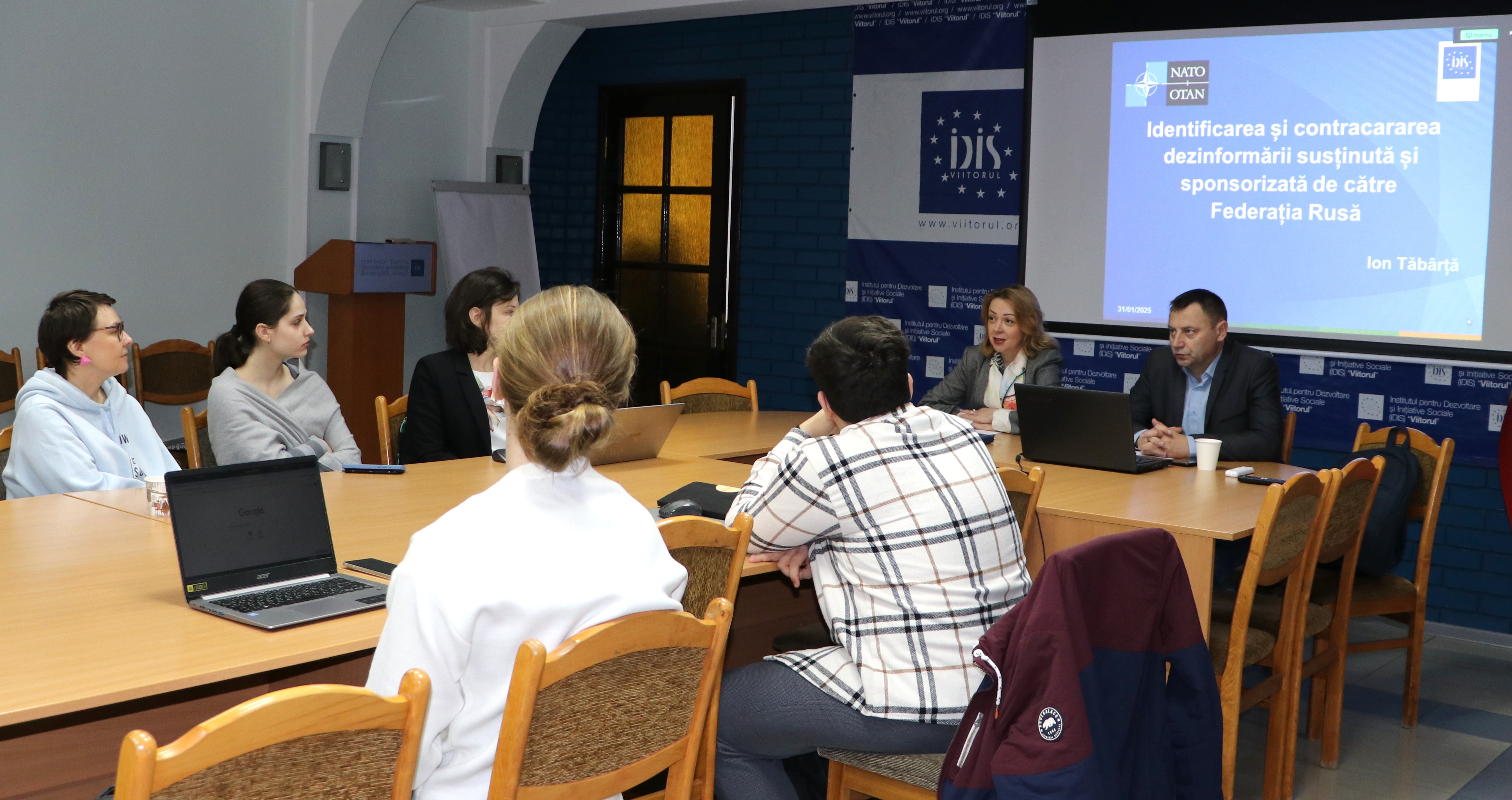
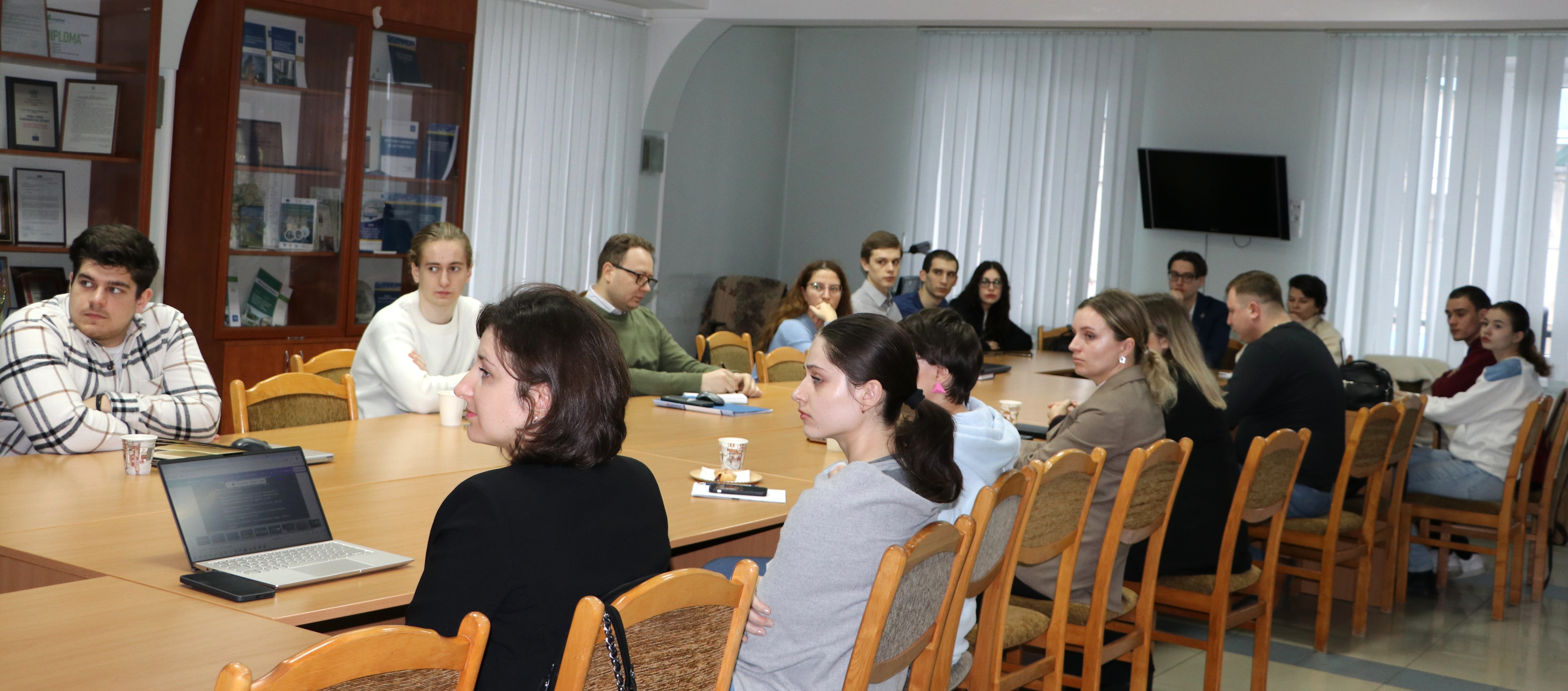
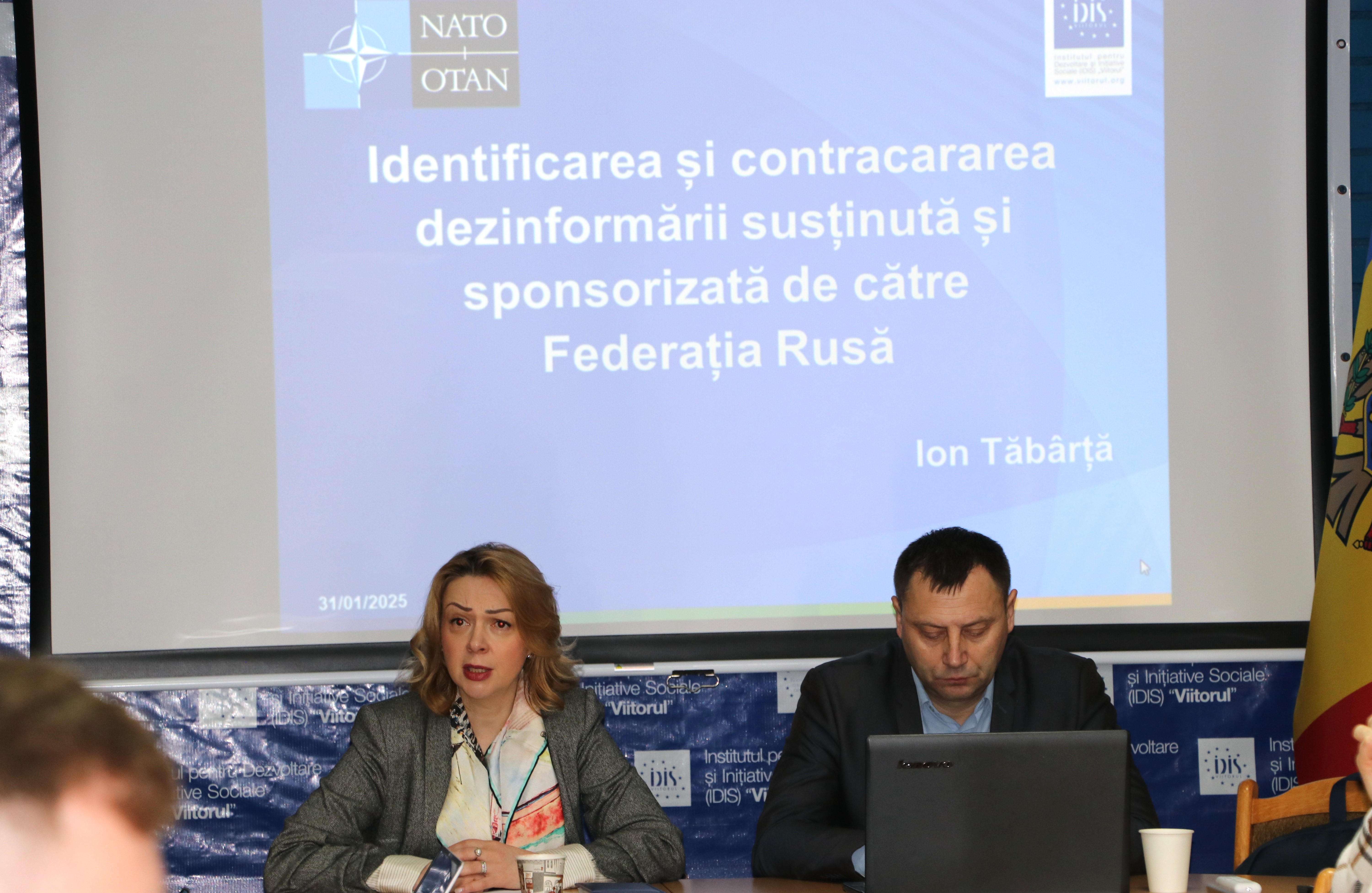
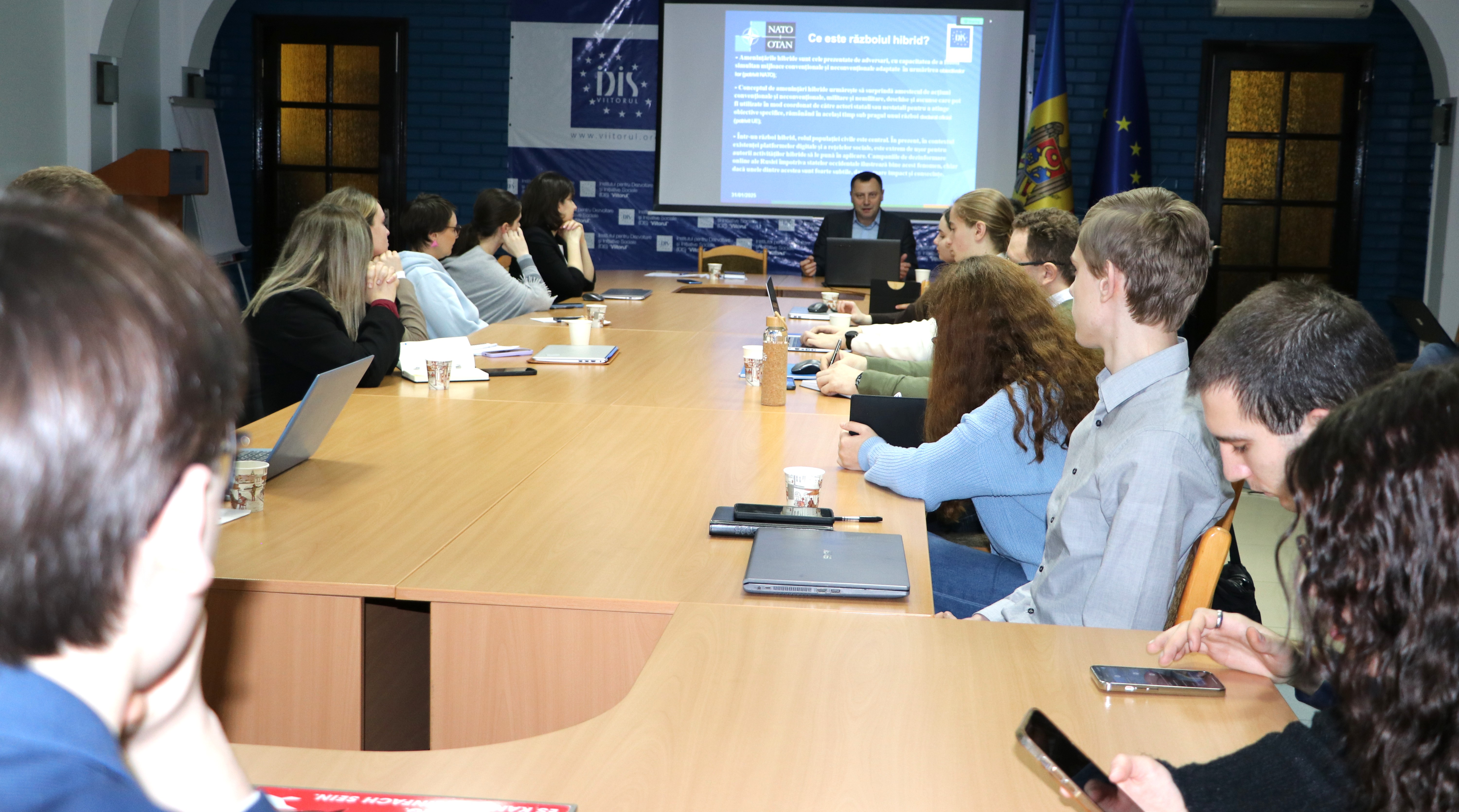
The Institute for Development and Social Initiatives (IDIS) "Viitorul" conducted a practical workshop on Friday, January 31, 2025, on methods of identifying and countering disinformation supported and sponsored by the Russian Federation in the Republic of Moldova. The event was attended by more than 20 young people, students, representatives of civil society organizations, members of youth centers, etc., who were selected based on a competition. The activity was part of the "Calling out disinformation and misinformation in the Republic of Moldova" project, funded by NATO's Public Diplomacy Division and implemented from December 2024 to March 2025, by IDIS ”Viitorul”.
At the opening of the workshop, Carolina Ungureanu, Deputy Director of IDIS "Viitorul", said that IDIS "Viitorul" has vast experience in implementing similar projects, and the interest in their activities and the topic of misinformation was high. "Lately, we see a strong tendency to spread false and misinforming information, not so much on TV, radio, or print media, but especially online, on social networks. What we have done before was useful and necessary for the participants of the misinformation activities. In this project, we also want to focus on methods to identify and counter misinformation and to promote truthful messages, so that citizens can have more exposed views on some phenomena", said Carolina Ungureanu.
Ion Tăbîrță, executive director of the NATO Information and Documentation Center in the Republic of Moldova, and trainer of the practical workshop, said that nowadays, in the context of current digital platforms and social networks, it is easy for the authors of hybrid activities, which aim to promote false messages, to implement them, and Russia's online disinformation campaigns against Western states illustrate this phenomenon well, even if some of them are very subtle, but with great impact and consequences. "If we are talking about disinformation, the NATO institution, and the Chișinău structure that I currently head, have been the most subject to manipulation and disinformation throughout the history of the Republic of Moldova, especially by Russian propaganda," said Ion Tăbîrță.
Also at the workshop, young people learned from trainer Nina Bolocan to create infographics and videos aimed at countering Russian disinformation narratives. As a result, the workshop participants will develop 18 content products that will be shared on Facebook and subsequently showcased in three hackathons on February 6, 11, and 18, 2025. Three of the most active and inspiring participants in the activities will go on a study visit to NATO Headquarters in Brussels, Belgium, planned for the first half of March 2025.
The overall objective of the "Calling out Disinformation and Misinformation in the Republic of Moldova" project is to support the effort to counter the threats of disinformation and manipulation coming from the Russian Federation, targeting the Republic of Moldova. The specific objective of the project is to increase the capacities of young people, students, and opinion leaders in areas such as critical thinking, media literacy, analysis, resistance to misinformation, and reflecting the information of public interest in an unbiased way. It also aims to increase the resiliency of the Moldovan society in terms of critical thinking, media literacy, and resisting disinformation through an awareness and visibility action on social media, specifically tailored to call out Russian and Russian proxies’ disinformation and misinformation campaigns.
***
The "Calling out disinformation and misinformation in the Republic of Moldova" project, implemented by IDIS "Viitorul", is financially supported by the NATO's Public Diplomacy Division.
IDIS Viitorul is an independent think tank established in 1993 that combines social, political and economic research with strong advocacy components. The institution conducts applied monitoring research in several areas: economics, social policy, EU policies, regional development, and security and foreign policy risks.
Follow us on Facebook – https://www.facebook.com/IDISViitorul ;
Subscribe to the Telegram channel – https://t.me/idis93 ;
Watch us on the Youtube channel – https://www.youtube.com/@idisviitorul8539 .
The Institute for Development and Social Initiatives (IDIS) "Viitorul" is implementing, between December 2024 and March 2025, the "Calling out disinformation and misinformation in the Republic of Moldova" project, funded by NATO's Public Diplomacy Division.
The overall objective of the project is to support the effort to counter the threats of disinformation and manipulation coming from the Russian Federation, targeting the Republic of Moldova.
The specific objective of the project is to increase the capacities of young people, students and opinion leaders in areas such as: critical thinking, media literacy, analysis, resistance to misinformation, and reflecting the information of public interest in an unbiased way.
It also aims to increase the resiliency of the Moldovan society in terms of critical thinking, media literacy, and resisting disinformation through an awareness and visibility action on social media, specifically tailored to call out Russian and Russian proxies’ disinformation and misinformation campaigns.
Up to 25 young people, students, representatives of civil society organizations, members of Youth Centers etc., who are over 18 years old, will be selected on a competitive basis to participate in project activities. They will participate in a practical workshop focused on identifying and countering Russian-supported and sponsored disinformation, learning to create infographics and videos aimed at countering Russian disinformation narratives, which will later be presented in three hackathons. As a practical activity, the participants of the practical workshop, also given at the 3 hackathons, will develop 18 content products, that will be shared on social media.
The most active and inspired participants will go on a study visit to NATO headquarters in Brussels.
***
The "Calling out disinformation and misinformation in the Republic of Moldova" project, implemented by IDIS "Viitorul", is financially supported by the NATO's Public Diplomacy Division.
IDIS Viitorul is an independent think tank established in 1993 that combines social, political and economic research with strong advocacy components. The institution conducts applied monitoring research in several areas: economics, social policy, EU policies, regional development, and security and foreign policy risks.
Follow us on Facebook – https://www.facebook.com/IDISViitorul ;
Subscribe to the Telegram channel – https://t.me/idis93 ;
Watch us on the Youtube channel – https://www.youtube.com/@idisviitorul8539 .