Lending to the economy has been declining steadily for almost three years. In the second quarter of this year, the volume of credits granted amounted to ROL 34.2 billion compared to ROL 47.2 billion in 2004 Q3, a reduction of 13 billion lei.
However, in terms of GDP, the situation is much more dramatic. Lending to the economy is at 24.2% of GDP, the lowest level in recent years, and 70% lower than the peak reached in 2014 third quarter.
If we maintain the same level of lending of the economy in relation to GDP, then the volume of credits offered at present should be at the level of 59 billion lei, or 25 billion lei more. The inability of the economy to absorb financial resources clearly illustrates the deplorable state of our economy. Sad but true, the economy dies and apparently there are no signs of a return to life.


The subject that is being discussed in various countries about money circulation is: what is it preferable to have coins or banknotes?
Delaying this replacement has resulted in additional costs of at least $ 7 million over this period. If by 2011 this delay in replacement did not have a significant impact on the costs incurred by the National Bank, then after 2011 the costs of replacing the one-leu bank have increased exponentially.
If we do not immediately replace the banknote by a lion, then we risk losing between 15-25 million lei annually, only by replacing the banknotes with a used one.
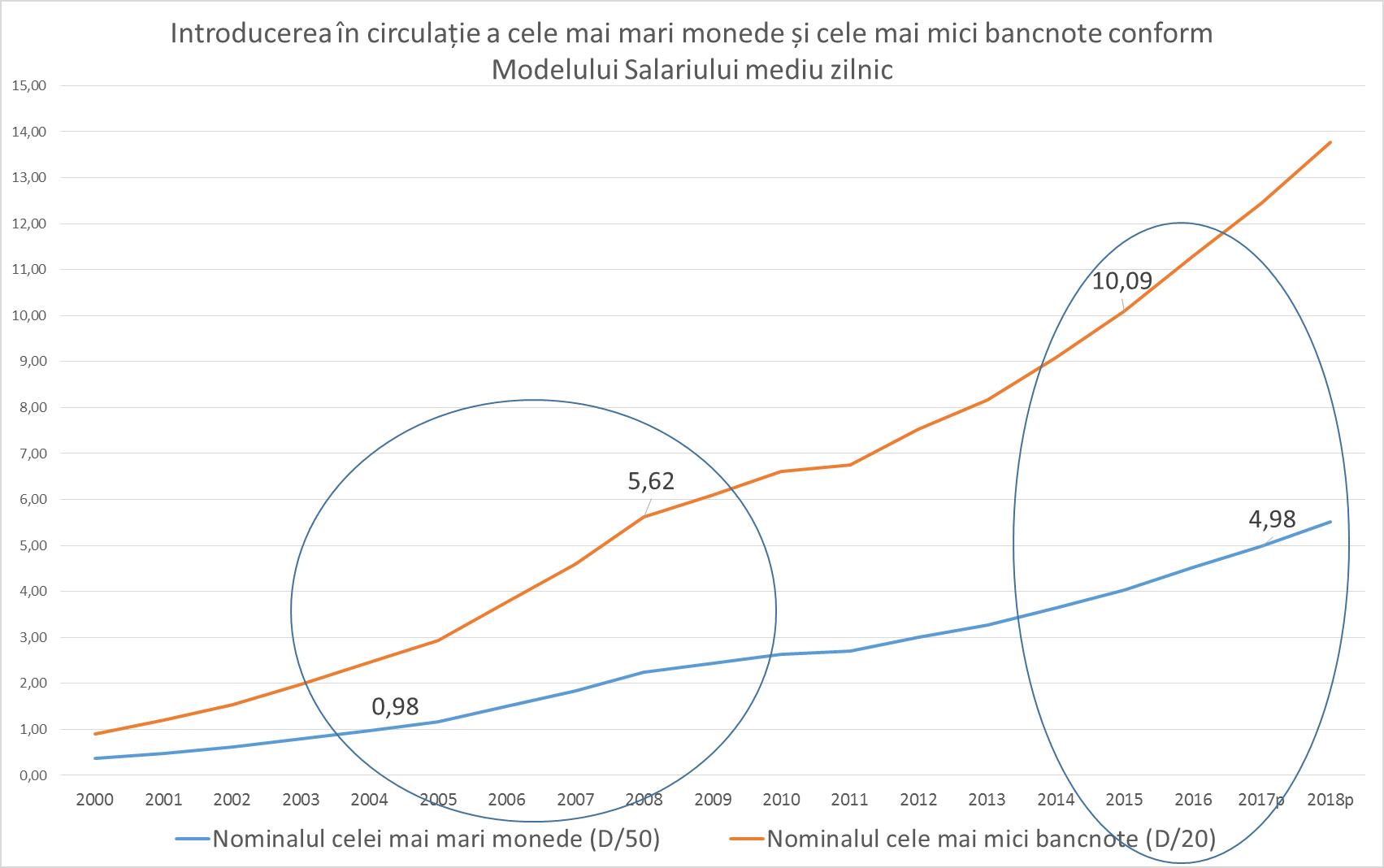
Moldova's monetary authorities are late in replacing banknotes in coins. If we follow the chart carefully, then we can easily find that between 2015-2017 the process of replacing the banknote of 5 lei with the one of the 5 lei had to start.
But taking into account our specificity, we can conclude that the National Bank is due to introduce coins of 1 and 2 lei at the latest this year and in the next 3-5 years to introduce coins of 5 and 10 lei.