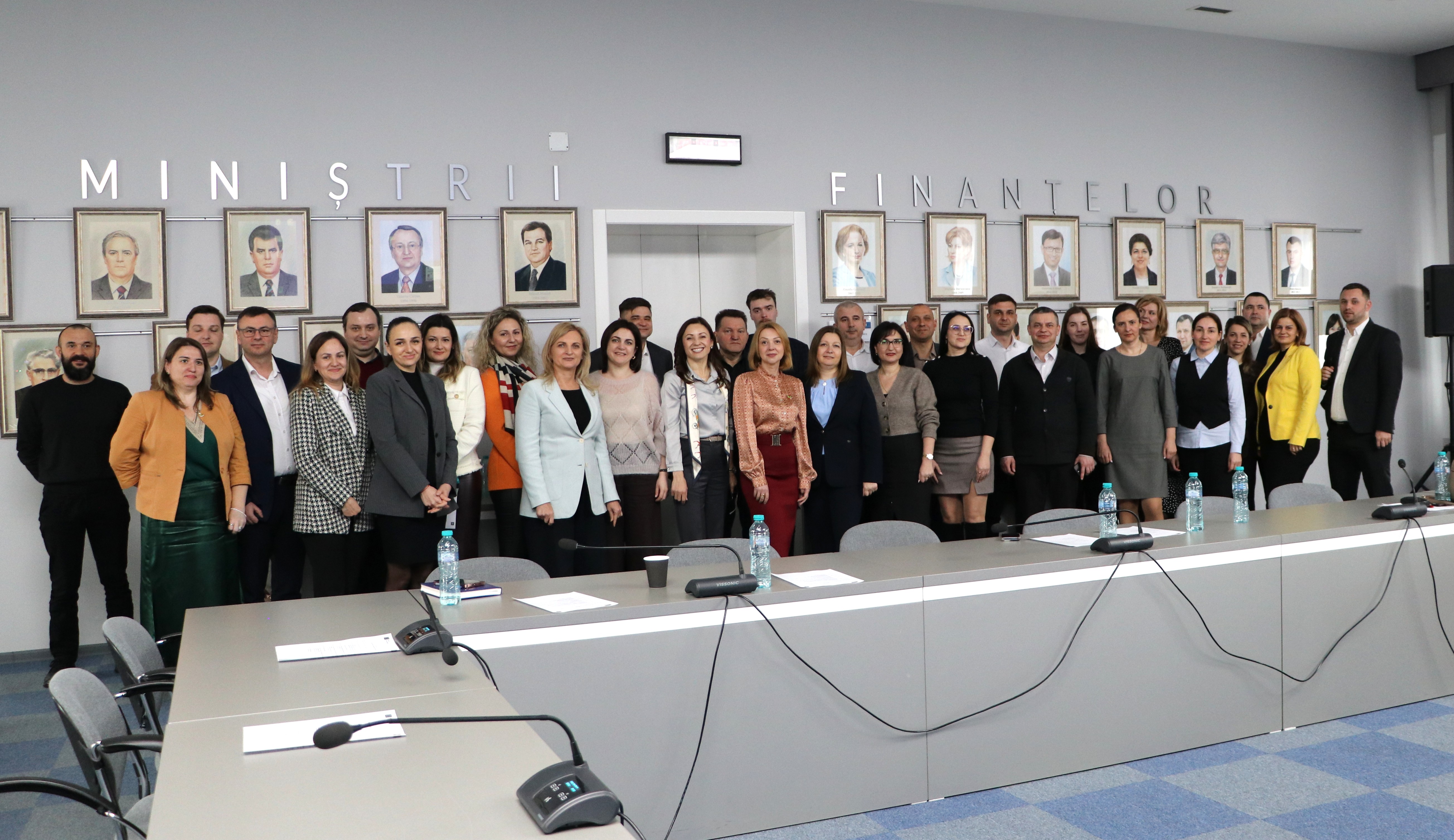
Members of the National Platform for Public Procurement (NPPP) met in session on Wednesday, March 18, 2026, during which the Ministry of Finance (MF) presented the concept for the new Public Procurement Information System - e-Achizitii, as well as the draft law on electronic invoicing in the procurement field. At the same time, IDIS "Viitorul" experts, Diana Enachi and Vadim Țurcan, presented an analysis of the system's provisions, including proposals for improvement.
At the meeting's start, Elena Grumeza, Secretary of State at the Ministry of Finance, said the topics discussed are essential to align with EU public procurement standards, increase transparency, ensure responsible public fund management, and improve current system data quality. She noted that digitalization helps reduce bureaucracy and corruption risks, increase transparency, and improve process quality. She added that these changes also bring challenges, requiring careful management and suitable solutions.
Wojciech Paczynski, program manager at the EU Delegation, emphasized that the new electronic system will improve efficiency and ensure better use of public money. Digital tools, he said, support simpler procurement and save time. These electronic systems are business-friendly, encouraging more economic operators to participate, thereby increasing competition and streamlining procedures.
Carolina Ungureanu, deputy director at IDIS "Viitorul", stated that the Republic of Moldova is at a crucial stage of reform in public procurement, marked by the transition from a fragmented system with multiple deficiencies to a more complex and functional one. According to Caroline Ungureanu, the development of the new system is an essential step in modernizing public administration, and success depends not only on the technical component but also on its implementation, use, and monitoring.
Sergiu Căinăreanu, head of the Public Procurement Policy Department at the Ministry of Finance, shared that eight years with the MTender system have brought progress in digitalizing public procurement. However, there are still issues, including incomplete coverage of procurement stages, limited integration with other systems, and limited automation. As a result, the new system was designed to meet international standards and improve public procurement management.
According to Lilia Radul, a senior consultant in the Public Procurement Policy Directorate of the Ministry of Finance, the draft law on electronic invoicing in the procurement field aims to address gaps in the existing tax regulations. "The new law regulates the use of electronic invoices in procurement contracts, covering invoices issued by both VAT payers and non-payers, and requires the adoption of the model according to the European standard," said Lilia Radu.
The analytical note on the concept of the new system, prepared by Diana Enachi and Vadim Țurcan, experts from IDIS "Viitorul", includes findings, data, and recommendations for creating a functional, transparent, and efficient system.
"The analysis highlights key deficiencies of Mtender. These include incomplete coverage of the procurement cycle, a lack of legally compliant features, excessive reliance on static documents, limited integration with government registers, poor data quality, and the absence of an analysis tool. These gaps increase the risk of fraud, favoritism, and non-transparent practices. They also reduce monitoring access and undermine trust in institutions," said Diana Enachi.
"The analytical note recommends digitizing the entire procurement cycle, from budgeting and planning, publication, evaluation, award, contracting, invoicing, and payments, to monitoring and analysis, as well as the correlation between budget, procurement, and financial execution. It emphasizes the need for access to the complete electronic file of a procurement and the publication of open data according to the Open Contracting Data Standard, to ensure interoperability and data reuse," said Vadim Țurcan.
Members of the NPPP welcomed the new public procurement information system. They said modernizing and digitizing processes will make public spending more transparent and efficient. They also stressed that civil society and the business community must be consulted at every stage to ensure the platform meets users’ needs and follows European best practices.
The activities of the NPPP take place within the "Supporting Moldova’s public procurement reform in the EU accession context” project, implemented by IDIS "Viitorul" with EU support, between September 2025 and September 2026.
This press release was produced with the financial support of the European Union. Its content represents the sole responsibility of the "Supporting Moldova’s public procurement reform in the EU accession context” project, financed by the European Union. The content of the press release belongs to the authors and does not necessarily reflect the vision of the European Union.
For additional information about the project, please get in touch with the project's communication specialist, Maria Procopciuc, at +37360088544 or at the e-mail address: maria.procopciuc@viitorul.org.